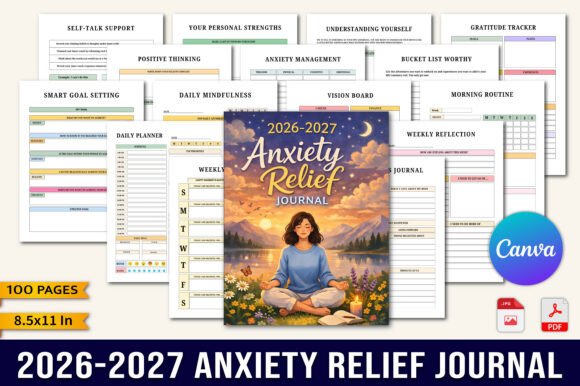
2026–2027 Anxiety Relief Journal: A Complete Guide
If you've ever felt that your to-do list and your mental well-being are pulling in opposite directions, you're not alone. The 2026–2027 Anxiety Relief Journal was created to bridge that gap. It's not just another planner—it's a two-year companion that helps you organize your days while actively supporting a calmer mindset. Instead of treating productivity and self-care as separate tasks, this journal weaves them together so you can plan your life and nurture your inner world at the same time.
Whether you're managing a busy career, running a small business, freelancing, or simply trying to keep up with daily demands, this journal offers a structured yet flexible way to check in with yourself. It gently guides you through habit tracking, emotional awareness, and intentional goal setting—all within the same pages you use to schedule meetings and jot down grocery lists.
What Makes the 2026–2027 Anxiety Relief Journal Different
Most planners focus solely on what you need to do. This one also asks how you feel. The 2026–2027 Anxiety Relief Journal is thoughtfully designed for people who want more than a calendar—they want a tool that helps them build resilience, practice gratitude, and stay grounded. Its value lies in its dual purpose: keeping you organized while encouraging regular moments of mindfulness.
For anyone new to journaling or self-care routines, the structure removes the guesswork. You don't need to figure out what to write or where to start. The journal includes prompts, trackers, and reflection spaces that make it easy to develop positive habits over time. For experienced users, it offers enough variety to keep the practice fresh and meaningful across two full years.
The appeal here is consistency. By having a single place for your monthly calendars, weekly plans, mood tracking, and gratitude entries, you're more likely to stick with the practice. And when you see your progress over weeks and months, it reinforces the habits that support a balanced life.
Key Features That Support Everyday Wellness
The 2026–2027 Anxiety Relief Journal includes a rich set of features that work together to address different aspects of mental wellness and productivity. Here's a closer look at what you'll find inside and how each piece can serve you:
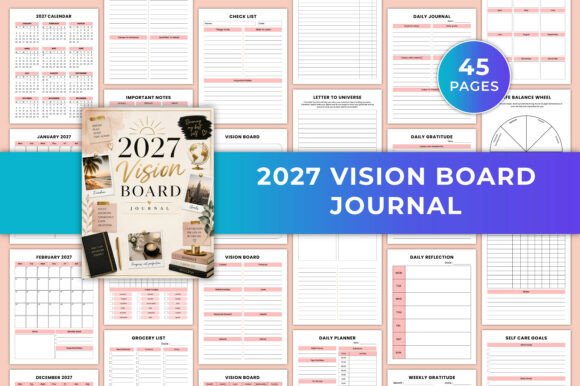
- Two-Year Monthly and Weekly Planners: Covering 2026 and 2027, these calendars help you map out appointments, deadlines, and personal commitments. Having a long-term view reduces the stress of last-minute surprises.
- Gratitude Journal and Weekly Gratitude: Simple prompts encourage you to notice what's going well. Over time, this trains your brain to focus on positives, which can ease anxious thinking.
- Mood Tracker and Weekly Reflection: By recording your emotions regularly, you start to see patterns. This awareness is the first step toward managing anxiety more effectively.
- Self-Care Activity Calendar and Checklist: These sections remind you to schedule rest, hobbies, and activities that recharge you—not as an afterthought, but as a priority.
- Habit Tracker and 6 Healthy Habits: Choose the habits that matter most to you and track them daily. Whether it's drinking water, exercising, or reading, small consistent actions build momentum.
- Vision Board and Mindset Reset: Visualizing your goals and periodically resetting your mindset can keep you motivated and prevent burnout.
- Morning and Evening Routines: Structured routines bookend your day with intention, helping you start with clarity and wind down with calm.
- Anxiety Management and Therapy Pages: Dedicated space for coping strategies, therapy notes, or self-talk support makes this journal a practical tool for anyone working with a therapist or on their own.
- Life Balance Wheel and Quarterly Goals: These tools help you assess how you're distributing your energy across work, relationships, health, and personal growth.
Each feature is designed to be used in just a few minutes a day. You don't need to fill every section—just the ones that resonate with where you are right now.
Practical Use Cases for Real Life
The 2026–2027 Anxiety Relief Journal fits naturally into many different lifestyles and professional contexts. Here are a few realistic examples:
- For professionals and entrepreneurs: Use the daily planner and smart goal setting to manage projects, while the mood tracker and self-care checklist help you avoid burnout during busy seasons. The weekly reflection can become a Friday ritual to review wins and challenges.
- For freelancers and creatives: The dream journal and vision board sections support creative exploration, while the habit tracker helps you maintain routines when your schedule is irregular. The bucket list pages can inspire long-term personal projects.
- For educators and small business owners: Balancing the needs of others with your own well-being is tough. The life balance wheel and quarterly goals give you a clear picture of where adjustments are needed. The gratitude tracker can shift your focus during stressful weeks.
- For beginners exploring self-care: If you're new to journaling, start with the five-minute journal page and the weekly gratitude prompt. These low-commitment entries build confidence without feeling overwhelming. As you get comfortable, you can explore the anxiety management or therapy sections.
- For anyone managing anxiety or stress: The anxiety management pages, self-talk support, and daily mindfulness prompts offer practical techniques to use in the moment. Pair these with the water tracker and acts of kindness pages to create a holistic wellness routine.
Where you use it matters too. Keep it on your desk for morning planning, bring it to therapy sessions for notes, or use it as a wind-down tool before bed. Its portability and durable design make it easy to integrate into your daily flow.
Important Considerations Before You Begin
Before you start using the 2026–2027 Anxiety Relief Journal, it helps to set realistic expectations. Here are a few things to keep in mind:
- Consistency over perfection: You don't need to fill every page every day. The goal is progress, not perfection. Start with one or two sections that feel most useful, then expand as the habit sticks.
- Choose what serves you: With so many features, it can be tempting to try everything at once. Instead, rotate sections seasonally. Use the gratitude journal heavily for a few months, then switch focus to the self-care tracker or the goal-setting pages.
- Pair it with professional support if needed: While this journal is a wonderful self-help tool, it is not a replacement for therapy or medical advice. Many users find it complements their work with a therapist by providing structure between sessions.
- Give yourself time to see patterns: Mood tracking and habit changes take weeks to show clear trends. Be patient with yourself and trust the process. The two-year format is designed for long-term growth.
- Make it yours: Feel free to skip sections that don't resonate. Add stickers, doodles, or personal notes. The journal is a container for your journey—customize it to reflect who you are.
Why This Journal Resonates Across Audiences
What makes the 2026–2027 Anxiety Relief Journal particularly effective is that it meets you where you are. Whether you're a seasoned planner user or someone who has never kept a journal, the layout is intuitive and forgiving. It acknowledges that life is messy and that mental wellness is not a linear path.
For busy adults trying to hold everything together, the combination of practical planning and emotional check-ins is a relief. You no longer have to choose between staying organized and taking care of your mind. The journal gives you permission to do both—and shows you how.
The inclusion of features like the jar of loving myself, your personal strengths, and understanding yourself pages adds a layer of self-compassion that typical planners overlook. These prompts encourage a kinder inner dialogue, which is foundational for reducing anxiety over time.
Getting the Most Out of Your Journal
To truly benefit from the 2026–2027 Anxiety Relief Journal, approach it with curiosity rather than pressure. Here are a few simple strategies:
- Set aside five minutes each morning to fill in the daily planner and one gratitude item. This small ritual sets a positive tone for the day.
- Use the weekly reflection on Sunday evenings to review what went well and what you want to adjust. This keeps you aligned with your goals without rigidity.
- Let the self-care activity calendar be your permission slip to rest. Block out time for hobbies, walks, or quiet moments just as you would for a meeting.
- Return to the vision board and bucket list pages every quarter to see how your priorities evolve. This keeps your long-term aspirations alive and connected to your daily actions.
Over the course of two years, these small practices compound. What starts as a simple journal becomes a record of your growth, a source of insight, and a steady anchor in uncertain times.
A Tool for a Calmer, More Balanced Life
Ultimately, the 2026–2027 Anxiety Relief Journal is about integration. It brings together the practical and the personal, the productive and the reflective. It acknowledges that you are a whole person—with goals, emotions, habits, and dreams—and gives you a space to nurture all of them.
If you're ready to move beyond scattered to-do lists and start building a life that feels both organized and peaceful, this journal offers a clear path forward. It's a gentle, consistent reminder that taking care of your mind is not separate from taking care of your day—it's the foundation of everything else.