400 Spiritual Awakening Journal Prompts
For anyone walking a spiritual path, journaling is far more than a habit—it is a way to track progress, surface hidden beliefs, and integrate insights that otherwise might remain abstract. Yet, the practice often stalls because of a single obstacle: not knowing what to write next. A blank page can feel like an invitation or an interrogation, depending on the day. The 400 Spiritual Awakening Journal Prompts collection addresses this directly by providing a structured, diverse set of inquiries that guide a practitioner through the many layers of inner work, from everyday mindfulness to the profound depths of shadow integration.
A Practical Framework for Sustained Inner Work
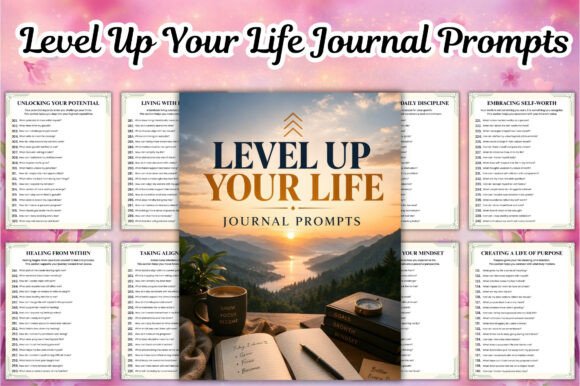
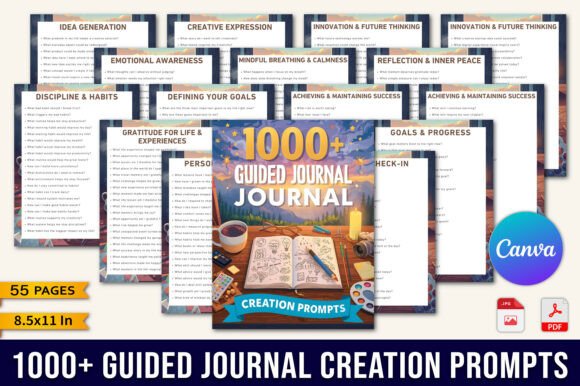
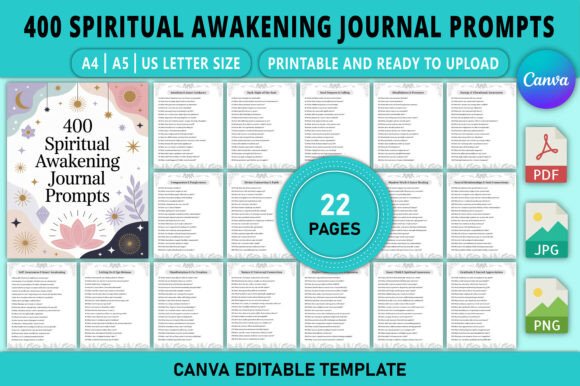
Spiritual awakening is rarely a linear event. It involves cycles of expansion, contraction, healing, and integration. A journaling practice that supports this process needs to be equally dynamic. The collection of 400 prompts is organized into roughly twenty thematic areas, which allows the user to tailor their focus based on what is arising in their life. Instead of forcing a generic gratitude practice when what you really need is to process an emotional trigger, you can turn to the sections on Shadow Work or Letting Go.
This structure saves a significant amount of mental energy. Deciding what to journal about is often the hardest part. When you have a curated question in front of you—such as “What outdated belief about myself am I still defending?”—the writing begins almost immediately. The resistance dissolves. For the busy professional or the parent who only has ten minutes in the morning, this efficiency is invaluable. It shifts the focus from figuring out the path to actually walking it.
Matching the Prompt to the Phase of Growth
One of the strongest features of this resource is its coverage of the entire awakening arc. Many journals focus exclusively either on light concepts like gratitude and manifestation, or on heavy topics like trauma and shadow. This collection bridges both. A user who is in a period of stability might explore prompts on Soul Purpose or Higher Consciousness Expansion. Someone navigating confusion or loss can find resonance in the Dark Night of the Soul section, which validates the struggle and offers questions designed to find meaning within the discomfort.
This comprehensive range means the resource stays relevant for years. You are not buying a single-use tool. As your practice deepens, the prompts reveal new layers. A question about authenticity explored today might yield a surface answer, but the same question revisited six months later, after significant inner work, can unlock a much deeper truth. The volume of prompts ensures that you will not exhaust the material, and the variety prevents the practice from becoming stale.
What Customization Adds to a Journaling Practice
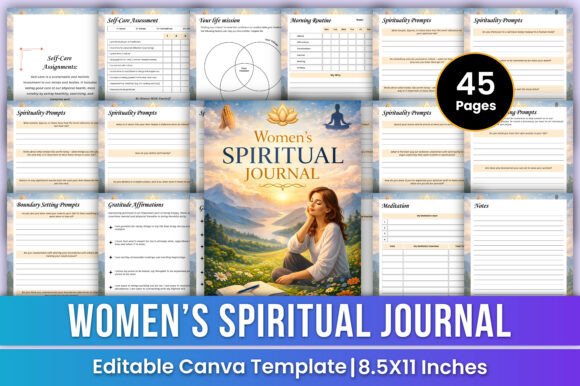
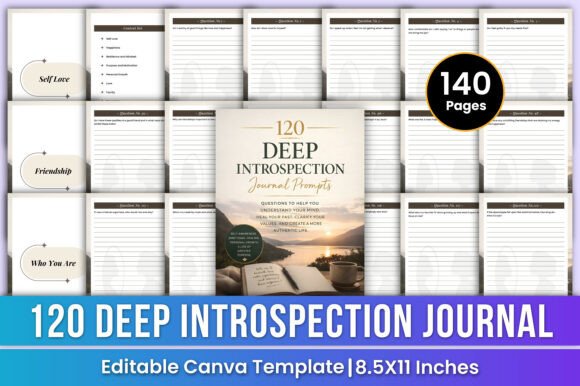
The printed version of a journal has a beautiful, tactile quality that screens cannot replicate. However, pre-printed journals come with fixed layouts and fonts that may not resonate with everyone. The editable Canva interior solves this problem elegantly. You have full control over the typography, colors, backgrounds, and arrangement. This might seem like a cosmetic feature, but for many spiritual practitioners, the aesthetic environment of their tools matters deeply. A journal that visually aligns with your sense of style feels more inviting and sacred. You are more likely to reach for it consistently.
For creators, coaches, and educators, the customization feature is a practical necessity. If you offer journaling assignments to clients or students, you need the materials to reflect your professional identity. Branding a journal interior with your specific colors and style turns a generic resource into a signature offering. The ability to edit prompts slightly—perhaps rephrasing them to suit a particular audience or retreat theme—adds a level of flexibility that a standard PDF cannot provide. The availability of standard print sizes, including A4, A5, and US Letter, also makes the printing process straightforward, whether you intend to bind it professionally or print at home.
From Digital Template to Physical Tool
The workflow is remarkably practical. You can customize the template in Canva, download it as a PDF, and either use it digitally on a note-taking app or print it out. For those who prefer a physical journal but want the flexibility to reorganize pages or sections, having an editable file allows you to print only the prompts relevant to your current focus. If you are running a six-week workshop on Inner Child Healing, you can extract those specific prompts and compile a separate booklet for participants. This modularity is much harder to achieve with a static, pre-designed book.
Practical Recommendation: Use the A5 size for a portable journal that fits in a purse or backpack. Keep the A4 or US Letter version at home for deeper, long-form writing sessions. Having both formats available from the same customizable template ensures consistency in your practice regardless of location.Who Benefits Most from a Structured Prompt Collection
While any spiritual seeker can gain value from journaling, this specific collection is particularly suited to certain use cases. Understanding your own needs will help you assess how to use it most effectively.
- The Solitary Practitioner: If you do not have a teacher or a community, this journal becomes your guide. The prompts are carefully phrased to encourage self-inquiry without needing external validation. Sections like Intuition and Divine Connection help you build trust in your own inner voice.
- The Spiritual Coach or Therapist: Offering clients a branded, professional-grade journal as a bonus or workbook raises the perceived value of your services. The Transformation and Sacred Relationships sections provide excellent homework assignments that bridge the gap between sessions.
- The Creative Professional: Writers, artists, and entrepreneurs often face blocks that are spiritual in origin—fear of visibility, imposter syndrome, loss of meaning. Prompts in the Courage and Authentic Expression categories are designed to navigate these specific mental blocks and reconnect with creative purpose.
- The Mindfulness Practitioner: For those who already meditate, adding a journaling component with Presence and Energy Vibrational Awareness prompts deepens the contemplative practice. It provides a space to articulate what arises during silence.
Navigating the Depth of Categories
The twenty categories are not arbitrarily chosen. They represent a cohesive map of spiritual development. The early categories, such as Self-Awareness and Gratitude, are accessible entry points. They build the habit and train the mind to look inward. As a user becomes more comfortable, they can move into Shadow Work and Ego Release, which require more honesty and vulnerability.
Intermediate sections like Soul Purpose and Manifestation shift the focus from healing to creation. They ask: “Now that you are clearing the old, what do you actually want to build?” The later categories, including Higher Consciousness and Legacy, invite a broader perspective, connecting the personal journey to universal themes of impact and spiritual evolution. This progression makes the journal suitable for both beginners and advanced practitioners. A beginner can stay in the foundational sections for months, while an advanced user can dive directly into the more esoteric prompts.
Considerations for Integration
It is worth noting that a collection of 400 prompts requires personal curation. Not every question will resonate on every day. The strength of the resource lies in its abundance, but that abundance can feel overwhelming if you try to use it linearly from start to finish. A more effective approach is to scan the table of contents and pick a category that aligns with your current emotional or spiritual state. If you are feeling resistant to a certain area of life, for instance, the Letting Go section is likely more relevant than the Manifestation section.
For those new to journaling, committing to a single prompt per day is a sustainable rhythm. At that pace, the collection provides over a year of daily material. For deeper dives, a user might spend a week on a single category, exploring five to ten prompts each morning and noticing how the answers evolve with repeated reflection. The flexibility is built into the design.
Long-Term Value and Practical Application
The true test of any journaling resource is whether it remains useful after the novelty wears off. The 400 Spiritual Awakening Journal Prompts collection passes that test because of its depth and the editable format. As your spiritual understanding evolves, you can adjust the journal to match. You might change the color scheme to reflect a new phase of life, or you might rephrase prompts to suit a more specific focus, such as a year-long study of forgiveness or a deep exploration of energy work.
The print-ready feature also means you are not dependent on an app or an internet connection. Having a physical book you have created yourself carries a sense of ownership that deepens commitment. Seeing your handwriting in a book that you designed fosters a unique connection to the material. It becomes not just a product you purchased, but a tool you intentionally shaped.
For anyone serious about using journaling as a technology for awakening, having a structured, abundant, and customizable resource removes the most common barriers to consistency. It streamlines the process, supports deeper inquiry, and adapts to the changing demands of the inner journey. Whether you are facilitating growth for others or walking your own path, the combination of variety, professional design, and editing flexibility makes this collection a pragmatic and lasting companion for spiritual exploration.