120 Deep Introspection Journal Prompts: A Practical Guide to Self-Reflection and Personal Growth
Journaling has long been one of the most accessible tools for understanding yourself, processing emotions, and tracking personal development. But not all journals are created equal. Some offer open-ended pages, while others provide structured guidance. The 120 Deep Introspection Journal Prompts and its accompanying Printable Self-Reflection Workbook sit at the intersection of structure and freedom, aiming to help you explore your inner world without feeling overwhelmed. Whether you are new to journaling or returning to the practice, understanding what this resource offers, how it compares to other approaches, and when it might fit your needs can help you make a more informed decision.
This article breaks down the key features, strengths, and limitations of the 120 Deep Introspection Journal Prompts, compares it with other common journaling formats, and offers realistic guidance on whether this workbook aligns with your goals.
What Makes the 120 Deep Introspection Journal Prompts Distinct
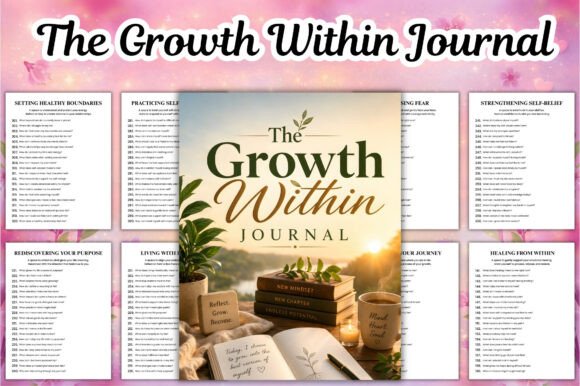
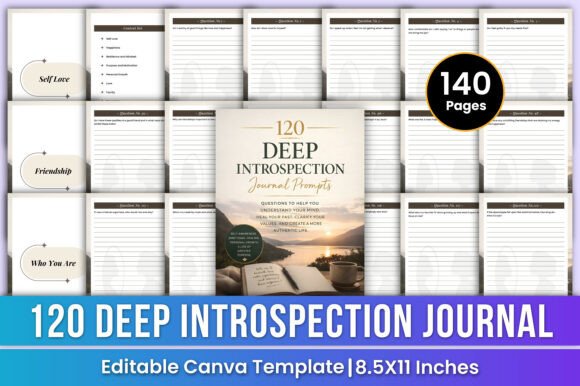
At its core, this workbook provides 120 carefully crafted prompts organized into sections such as Self-Love, Happiness, Mindset, Relationships, and Personal Growth. Each prompt is designed to spark self-reflection and insight, and the layout includes lined writing space for thoughtful responses. The design is intentionally minimal and calming, which can make the experience feel less like a homework assignment and more like a private conversation with yourself.
What sets this resource apart from a blank notebook or a generic journal is the combination of guided questions and organized sections. Instead of facing an empty page and wondering where to start, you have a clear direction. The prompts are not random—they are grouped by theme, which allows you to focus on one area of your life at a time, such as healing, relationships, or emotional balance. This thematic organization is especially helpful if you are using the journal for therapy support, coaching, or a structured daily reflection habit.
Another distinguishing factor is the inclusion of editable Canva templates and print-ready PDF files. This means you can customize the pages before printing, or you can work digitally if that suits your workflow. The high-quality JPG, PNG, and PDF files give you flexibility, whether you prefer a physical notebook or a digital journaling experience. The trim size of 8.5x11 inches offers ample space for writing, which many users find more comfortable than smaller formats.
How It Compares with Other Journaling Approaches
Journaling resources generally fall into a few broad categories: blank notebooks, guided journals with prompts, digital apps, and printable workbooks. Each has its own strengths, and the best choice depends on your preferences and goals.
Blank Notebooks vs. Guided Prompts
A blank notebook offers unlimited freedom, but that freedom can be paralyzing if you are unsure what to write about. Many people start a blank journal with enthusiasm, only to abandon it after a few pages because they run out of ideas or feel their entries become repetitive. The 120 Deep Introspection Journal Prompts solves this by providing a steady stream of questions that keep your writing fresh and focused. If you have ever found yourself staring at a blank page, you may appreciate the structure this workbook provides.
On the other hand, if you already have a strong internal drive to write and know exactly what you want to explore, a blank notebook may be sufficient. The tradeoff is that you miss the guided discovery that prompts can offer—questions you might never think to ask yourself can open up new insights.
Digital Apps vs. Printable Workbooks
Journaling apps offer convenience, reminders, and sometimes community features, but they also come with screen time, distractions, and privacy concerns. The 120 Deep Introspection Journal Prompts workbook, especially in its print-ready PDF form, gives you a screen-free experience that many people find more conducive to deep reflection. Writing by hand has been shown to engage the brain differently than typing, often leading to deeper processing and retention of insights.
However, if you are someone who prefers to journal on a tablet or laptop and values searchability and cloud backup, a digital app might be a better fit. The editable Canva templates included with this workbook offer a middle ground—you can customize and use them digitally if you wish, but the primary design is for printing and handwriting.
Workbooks with Fixed Content vs. Open-Ended Journals
Workbooks with pre-written prompts guide you step by step, which can be reassuring if you want a clear path. The 120 Deep Introspection Journal Prompts falls into this category. However, some people prefer a more fluid approach where they can follow their thoughts wherever they lead, without being constrained by a set list of questions. If you are naturally curious and disciplined, an open-ended journal might serve you better. If you appreciate structure and want to ensure you cover multiple dimensions of your life, this workbook is likely the stronger choice.
Strengths and Practical Benefits
One of the most notable strengths of this workbook is its breadth. With 120 prompts spanning six or more themes, you can work through it over several months without running out of material. Each prompt is designed to provoke thought rather than just elicit a surface-level answer. For example, a prompt about self-love might ask you to reflect on a time you showed yourself compassion in a difficult situation, rather than simply asking "Do you love yourself?" This depth is what makes the workbook suitable for personal growth, therapy support, and mindfulness practice.
The organization into sections is another practical benefit. If you are in a phase where you want to focus on healing, you can turn to that section directly. If you want to explore your mindset or relationships, those areas are clearly separated. This saves you time and helps you stay intentional about what you are working on.
The design quality also matters. The elegant minimal layout reduces visual clutter, which can help you stay focused on your thoughts rather than being distracted by decorative elements. The ample writing space means you are not limited to one-line answers—you can write a paragraph or more for each prompt, allowing for genuine exploration.
Tradeoffs and Limitations to Consider
No single resource works for everyone, and the 120 Deep Introspection Journal Prompts has tradeoffs worth considering.
Fixed prompts mean you cannot choose the questions yourself. While the prompts are well-crafted, you may eventually want to ask your own questions or follow tangents. If you are someone who likes to deviate from a given structure, you might feel constrained after a while. One way around this is to use the workbook as a starting point and then continue your thoughts on separate pages, but that adds an extra step.
Self-directed use is another consideration. This workbook is designed for individual use, but if you are in therapy or coaching, you might need a resource that integrates with professional guidance. The prompts can certainly support therapy, but they are not a substitute for professional help. For some people, working through prompts alone can surface emotions that are best processed with a therapist. If you are dealing with significant trauma or mental health challenges, you may want to use this workbook alongside professional support rather than as a standalone tool.
Printing and customization may also be a practical hurdle. While the digital files are flexible, you still need access to a printer or the willingness to work on a screen. The 8.5x11 inch size is comfortable for writing but may be larger than a standard notebook, so consider your storage and portability needs. If you travel frequently, a smaller journal might be more convenient.
When This Workbook Is a Strong Fit
Given its design and features, the 120 Deep Introspection Journal Prompts works well in several scenarios:
- You are new to journaling and want guidance. The prompts remove the "what do I write about?" barrier and give you a clear starting point every day.
- You want to explore multiple areas of your life systematically. The themed sections let you focus on self-love one week, mindset the next, and relationships later—without having to design your own structure.
- You appreciate a clean, minimal aesthetic. The design is meant to be calming and distraction-free, which supports deeper introspection.
- You value the option to customize. The editable Canva templates allow you to change fonts, colors, or layouts to match your preferences before printing.
- You are using journaling as a complement to therapy or coaching. The prompts align well with self-discovery and emotional processing, offering material you can discuss with a professional.
When Another Option May Be Better
There are also situations where a different approach might serve you better:
- You prefer complete creative freedom. If you want to write whatever comes to mind without any prompts, a blank notebook or a dot-grid journal is a simpler choice.
- You need a compact, portable journal. The 8.5x11 inch size is not pocket-friendly. If you journal on the go, a smaller notebook or a digital app may be more practical.
- You are looking for a digital-only experience with app features. This workbook is primarily designed for print, though the editable templates can be used digitally. If you want reminders, streaks, or cloud syncing, an app will offer those features.
- You want a journal that focuses on a single topic in depth. This workbook covers six or more themes. If you only want to work on, say, gratitude or anxiety, you might prefer a specialized journal that goes deeper into one area.
Making an Informed Decision
Choosing a journaling resource is personal. The 120 Deep Introspection Journal Prompts and its Printable Self-Reflection Workbook offer a balanced combination of guidance, flexibility, and thoughtful design. It is not a one-size-fits-all solution, but for many people who want to build a consistent self-reflection practice, explore their inner world, and gain clarity across multiple life domains, it provides a practical and well-organized structure.
To decide if this is right for you, consider your current habits: Do you already journal regularly? If yes, do you want more structure or different prompts? If you are starting from scratch, the guided nature of this workbook may help you build momentum. Also think about your environment—do you have a quiet space where you can write by hand for 10–20 minutes? If so, the physical format will likely be rewarding.
Finally, remember that any journal is a tool, not a solution in itself. The value comes from your willingness to be honest, curious, and patient with yourself. A well-designed workbook like this one can make that process smoother, but your commitment to showing up and reflecting is what ultimately drives growth.
Whether you choose this workbook or another resource, the act of asking yourself deep questions is one of the most valuable habits you can develop. It is a practice that pays dividends in self-awareness, emotional balance, and a clearer sense of direction. The 120 Deep Introspection Journal Prompts simply gives you a thoughtful starting point.