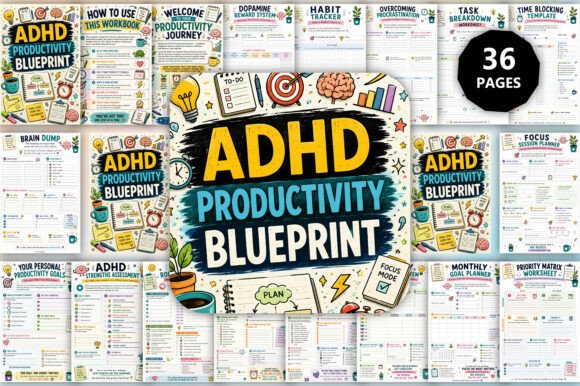
Understanding the ADHD Productivity Blueprint: A Practical Tool for Working with Your Brain
For adults navigating attention deficit hyperactivity disorder, the gap between intention and action can feel impossibly wide. Traditional productivity systems often assume a neurotypical brain that can maintain focus, resist distractions, and follow linear plans. When those systems fail, it is easy to blame yourself rather than the tool. The ADHD Productivity Blueprint enters this space as a different kind of resource—a workbook and self-management system designed specifically for how ADHD brains actually function. But is it the right fit for your needs? This article explores what the Blueprint offers, how it compares with other approaches, and what factors might influence your decision.
What Makes the ADHD Productivity Blueprint Distinct
At its core, the ADHD Productivity Blueprint is not a conventional planner. It is a structured yet flexible system that combines guided worksheets, trackers, planners, and reflection exercises. The key difference lies in its design philosophy: instead of forcing you to adapt to a rigid productivity method, it aims to adapt to you.
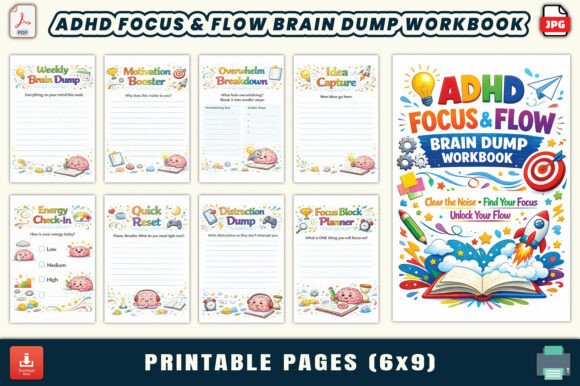
The workbook addresses several core challenges that adults with ADHD commonly face: difficulty with focus, impulsivity, procrastination, overwhelm, and inconsistent routines. Rather than offering one-size-fits-all advice, it provides multiple tools that you can mix and match. These include daily routine builders, weekly planning systems, monthly goal planners, time blocking templates, Pomodoro productivity planners, focus session planners, task breakdown worksheets, habit and routine tracking, brain dump exercises for mental clutter, procrastination and distraction support worksheets, screen time and digital balance trackers, and energy and motivation logs.
This breadth of components means the Blueprint functions more like a toolkit than a single method. You might use the brain dump pages one week to clear mental clutter and the focus session planners another week when you need to complete a specific project. That flexibility is a deliberate feature, not an afterthought.
How It Compares with General Productivity Systems
If you have explored productivity resources before, you have likely encountered popular systems like time blocking, the Pomodoro Technique, bullet journaling, or various habit-tracking apps. The ADHD Productivity Blueprint incorporates elements of each, but it does so with modifications that account for ADHD-specific patterns.
For example, standard time blocking assumes you can estimate how long tasks will take and stick to a schedule. Many adults with ADHD know that both assumptions are often unrealistic. The Blueprint’s time management tools include built-in buffers and reflection prompts that help you adjust expectations based on actual experience rather than wishful thinking. Similarly, the Pomodoro planners are not just timers—they include space to note what distracted you and what helped you refocus, turning each session into a learning opportunity.
Where a generic planner might simply list “tasks for today,” the ADHD Productivity Blueprint includes priority management worksheets that help you separate what feels urgent from what is actually important. The brain dump pages are particularly useful here: they allow you to externalise racing thoughts before trying to organise them. This step reduces the cognitive load that often leads to paralysis.
The tradeoff is that the Blueprint requires more engagement upfront than a simple to-do list or a basic app. You need to be willing to sit down with the worksheets and reflect. For some people, that reflection is exactly what is missing from their current system. For others, the idea of adding more paper or screens to their routine may feel overwhelming.
Strengths of the ADHD Productivity Blueprint
One of the strongest aspects of this workbook is its recognition that energy and motivation fluctuate. The energy and motivation tracking pages allow you to log how you feel at different times of day and identify patterns in your productivity. Over time, this data can help you schedule focused work during your natural peaks and reserve low-energy periods for rest or low-demand tasks.
The habit and routine building sections are similarly thoughtful. Many habit-tracking systems rely on streaks and daily checkmarks, which can backfire for people with ADHD if a missed day triggers shame and abandonment of the habit altogether. The Blueprint’s tracking approach is gentler: it encourages consistency without punishing gaps, and it includes reflection prompts that help you understand why a routine worked or didn’t work on a given day.
The distraction and procrastination worksheets are another area where the Blueprint shines. Instead of treating procrastination as a moral failing, these pages guide you to explore the underlying reasons—task aversion, fear of failure, overwhelm, or lack of clarity. Once you identify the root cause, the worksheets suggest targeted strategies rather than generic advice like “just start.”
The screen time and digital balance component is also worth noting. Many adults with ADHD struggle with phone overuse and doomscrolling, especially during moments of low motivation. The Blueprint includes structured logs to track screen habits and set intentional limits, but it does not shame you for using screens. The focus is on awareness and gradual adjustment rather than abrupt digital detoxes.
Limitations and Situations Where Another Option May Be Better
No tool works for everyone, and the ADHD Productivity Blueprint has genuine limitations. First, it is a physical or downloadable workbook. If you prefer fully digital solutions, or if you struggle to keep track of paper documents, a digital app might suit you better. Some people with ADHD find that paper systems get lost or forgotten, while others find that writing by hand helps with memory and focus. Think honestly about your own relationship with physical materials.
Second, the Blueprint is comprehensive, and that comprehensiveness can be a double-edged sword. With so many worksheets and trackers, there is a risk of feeling that you need to use everything at once. The Blueprint works best when you treat it as a menu, not a prescription. If you are someone who feels pressure to complete every page, you may need to consciously give yourself permission to skip sections that don’t resonate.
Third, the workbook assumes a certain baseline of self-awareness and willingness to engage in reflection. If you are currently in a state of high overwhelm or burnout, even opening a workbook may feel like too much. In that case, a simpler approach—such as a single daily checklist or a low-demand app—might be a better starting point. You can always return to a more comprehensive system later.
Fourth, while the Blueprint includes evidence-informed strategies, it is not a substitute for professional support. If you are struggling with severe executive dysfunction, comorbid conditions, or medication management, a therapist, coach, or psychiatrist should be part of your support system. The workbook is a complementary tool, not a replacement.
Who Is the Ideal Fit for the ADHD Productivity Blueprint
The Blueprint tends to work well for adults who have some familiarity with their ADHD patterns and are ready to move beyond generic advice. If you have tried multiple systems and felt that none of them quite fit, the Blueprint’s flexibility may be appealing. It also suits people who benefit from structured reflection: those who find that writing things down helps clarify their thoughts and reduce mental clutter.
Another good fit is someone who is tired of productivity systems that ignore emotional and motivational factors. The Blueprint explicitly addresses dopamine, energy levels, and the emotional side of task initiation. If you have ever felt that standard productivity advice assumes you have willpower you simply do not have, this workbook might resonate.
Adults who are balancing work, home responsibilities, and personal projects often appreciate the layered planning approach. The daily, weekly, and monthly planners help you zoom in and out so that you are not stuck in either the weeds or the clouds. The monthly goal planner, for example, encourages you to set a few meaningful objectives rather than a long list of unrealistic resolutions.
When a Different Approach Might Serve You Better
If you are looking for a quick fix or a system that requires minimal effort, the ADHD Productivity Blueprint may not be the right starting point. It asks you to engage with it regularly and reflect honestly. Some people find that commitment freeing; others find it burdensome.
If you thrive on external accountability and real-time reminders, a digital app with notifications, timers, and social features might fill a gap that a workbook cannot. Similarly, if you prefer gamification and rewards, you might look for a tool that incorporates those elements more directly.
If you need a system that is extremely minimalist, the Blueprint’s breadth could feel overwhelming. In that case, you might consider a single weekly planner or a habit tracker that focuses on just one or two goals at a time. You could also use the Blueprint selectively—pulling out only the brain dump pages or the focus session planners—and ignore the rest.
Practical Decision Factors to Consider
Before deciding whether the ADHD Productivity Blueprint is right for you, ask yourself a few honest questions:
- Do I prefer paper-based planning, or do I lose paper items? If paper works for you, the workbook format is a strength. If not, look for a digital version or an alternative.
- Am I willing to spend ten to fifteen minutes per day on reflection and planning? The Blueprint is most effective when used consistently, even if briefly.
- Do I need a system that adapts to my energy levels and distractions? If standard planners have failed you because they assume constant motivation, this system addresses that gap.
- Am I currently overwhelmed to the point where any new system feels like a burden? If yes, consider a lighter approach first, and return to the Blueprint when you have more capacity.
- Do I want to understand my own patterns better, or do I just need a simple list of tasks? The Blueprint is designed for the former, but you can use it simply if you choose.
It may also help to try a small sample before committing. If you can access a few sample pages, test them for a week. See whether the brain dump exercise actually reduces your mental clutter, or whether the focus session planner helps you complete tasks you would otherwise avoid. The proof is in how the tool works for your specific brain, not in how it looks on paper.
Using the ADHD Productivity Blueprint as Part of a Broader Strategy
Most adults with ADHD benefit from a combination of supports: possibly medication or therapy, lifestyle habits like sleep and exercise, and practical tools like planners or apps. The ADHD Productivity Blueprint fits into the tool category, but it is most effective when used alongside other strategies that address your overall wellbeing.
For example, if you notice from the energy tracking pages that your focus is consistently low in the afternoon, you might adjust your schedule or discuss fatigue with your doctor. If the procrastination worksheets reveal that perfectionism is blocking you, you might seek a therapist who specialises in ADHD or perfectionism. The Blueprint can surface insights, but acting on those insights often requires additional support.
The reflection exercises in the workbook also encourage you to celebrate small wins and notice progress. This is not soft advice; it is a practical response to the ADHD brain’s tendency to overlook achievements and dwell on perceived failures. By building in space for recognition, the Blueprint helps counter the negativity bias that can undermine motivation over time.
Final Thoughts on Evaluating the ADHD Productivity Blueprint
The ADHD Productivity Blueprint is one of several options available to adults who want a productivity system that does not fight their brain. Its distinct strengths lie in its ADHD-specific design, its flexibility, and its emphasis on understanding your own patterns rather than following rigid rules. It acknowledges that focus, energy, and motivation vary, and it gives you room to work with those variations.
That said, it is not the only good option, and it will not suit everyone. Some people will prefer the simplicity of a single notebook or the convenience of a digital app. Others may need more professional support than a workbook can provide. The key is to choose a tool that reduces friction in your life, not one that adds to it.
The best way to decide is to consider your current struggles honestly. If you need help organising your thoughts, managing distractions, and building routines that respect your natural rhythms, the ADHD Productivity Blueprint is worth exploring. If you need something lighter, more automated, or more guided by a professional, look further. Either way, the goal is not to find the perfect system. It is to find the system that helps you move forward, one day at a time.