Rewire Your Brain Workbook: Practical Tools for Transforming Your Daily Workflows
Why Your Tool Stack Needs a Cognitive Upgrade
Professionals, creators, and entrepreneurs often share a hidden bottleneck. It is not a lack of ambition, a deficient tool stack, or poor time management on paper. The real friction typically lies in deeply ingrained mental patterns—the reflexive doubt before a pitch, the resistance to starting a difficult task, or the autopilot habits that derail a focused morning. Changing these patterns requires more than motivation; it demands structured, repeatable exercises.
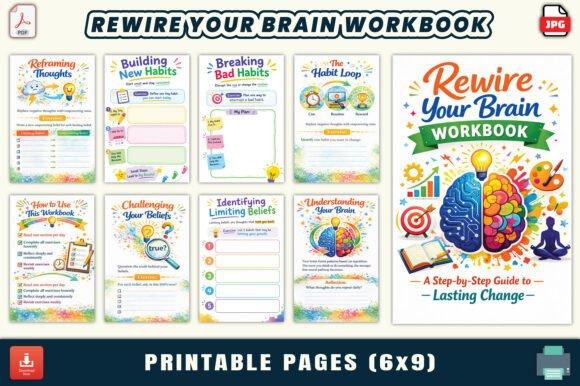
The Rewire Your Brain Workbook offers a tangible 30-page framework designed to bridge the gap between intellectual understanding and neurological change. It fits directly into the specific workflows of those who rely on consistent mental performance. This guide will show you exactly how to integrate this resource into your existing planning, creative, and business processes for measurable, lasting transformation.
Integrating the Workbook into Your Existing Planning Process
Most productivity systems manage what you do and when you do it. The Rewire Your Brain Workbook addresses how you think while doing it. This makes it a complementary layer to your existing toolkit, not a replacement. Consider placing it alongside your weekly review process. Before you plan your upcoming week, spend ten minutes with the "Limiting Beliefs" or "Reframing Negative Thoughts" sections. This clears mental friction before you schedule your priorities, leading to a more focused and realistic plan.
For project-based work, the workbook serves as a powerful pre-mortem and identity alignment tool. Before launching a new initiative, use the "Goal Setting and Identity Transformation" pages to ensure the project’s goals align with the identity of the person you are becoming. This creates internal congruence, drastically reducing the likelihood of self-sabotage later in the project lifecycle. It transforms a task list into a reflection of your deepest values.
Strategic Preparation: Setting the Conditions for Deep Rewiring
Treat the Rewire Your Brain Workbook like a precise instrument. Its 6×9 inch format is conducive for focused sessions, whether you use the print-ready PDFs or the JPG files in a digital note-taking app. For optimal integration, avoid browsing through it passively. Instead, select a specific domain you want to rewire—for example, "my reaction to unexpected client scope changes" or "my morning writing routine."
- Define a clear intention: Before opening the file, write down one specific question you want answered (e.g., "What belief is stopping me from delegating this task?").
- Set a consistent anchor time: Block 15 to 20 minutes on your calendar, ideally at the same time daily or weekly, dedicated solely to the workbook. Tuesdays at 10 AM or Sunday evenings work well for many professionals.
- Review recent patterns: Quickly scan your calendar or journal from the past week to identify specific moments where a negative pattern emerged. Use this as raw material for the exercises.
If you are using the digital files, import them into your existing system—GoodNotes, Notion, or OneNote all work well. Tag the specific exercises (e.g., #mindset, #limitingbeliefs) so they are instantly retrievable during relevant work sessions. This preparation ensures that every interaction with the workbook is targeted and efficient.
For the Entrepreneur and Small Business Owner
The entrepreneurial journey is a direct reflection of the founder's psychology. Use the "Identifying and Breaking Limiting Beliefs" sections before high-stakes decisions like pricing changes, hiring interviews, or fundraising conversations. The "Emotional Awareness and Self-Talk" module is particularly useful for navigating the volatility of business cycles. Integrate the "Daily Routines" template to structure your first 60 minutes around high-cognitive-load work, reducing reactive behavior. By pairing the workbook with your quarterly planning, you ensure that your external goals are backed by an internal mindset that supports them.
For the Creator, Blogger, and Freelancer
Creative resistance is a biological process, not a character flaw. The "How Your Brain Forms Habits" foundational pages help depersonalize this struggle. Use the "Reframing Negative Thoughts" exercise specifically for feedback review sessions. When a negative comment or difficult client email arrives, process it through the workbook framework before responding. This creates a crucial delay between stimulus and reaction, protecting your professional relationships and creative output. The "Building Strong, Lasting Habits" pages are ideal for cementing a daily content creation routine that survives motivational dips.
For the Educator, Coach, and Marketer
Your ability to guide others is limited by your own internal clarity. Using the Rewire Your Brain Workbook for personal grounding is an ethical and professional imperative. The "Mindfulness and Emotional Awareness" pages can serve as a personal check-in before client sessions or presentations. Apply the "Gratitude Practice and Resilience Building" exercises to maintain a positive, resourceful state, which directly impacts your audience's engagement and trust. This workbook functions as a form of professional development that improves your capacity to serve others effectively.
Synergy with Established Methods and Tools
The Rewire Your Brain Workbook functions as a deep inquiry engine for other systems. If you follow the Atomic Habits framework, use the "Building Strong, Lasting Habits" section to deeply install the identity shifts required for habit stacking. If you practice GTD, use the "Reflection Exercises" to process emotional residue from incomplete items, allowing for a clearer mind sweep.
The "Goal Setting and Identity Transformation" pages directly feed into OKR or quarterly planning sessions. Instead of just setting objective metrics, you define the identity traits required to hit those metrics. This transforms the goal from an external target to an internal expression, drastically increasing follow-through. The workbook is not a standalone artifact; it is a catalyst that amplifies the effectiveness of every other system you use.
Consistency, Usability, and Long-Term Adaptation
The risk with any high-quality resource is that it becomes a static artifact sitting in a downloads folder. To maximize your return on investment, treat the Rewire Your Brain Workbook as an iterative tool. Use the "Weekly Reviews" pages not just to track habits, but to track the quality of your thinking. Were you more patient? Did you catch a negative thought early? Did you follow through on a commitment to yourself?
- Modular approach: Do not attempt to complete the entire 30-page workbook in a weekend. Neural rewiring requires spaced repetition. Focus on one module per week. Apply the "Daily Routines" template rigorously for two weeks, then switch to the "Emotional Awareness" module.
- Quarterly revisits: Revisit the "Negative Thought Reframing" exercise every three months against your current biggest challenge. Archive completed PDFs to physically track your cognitive growth over time.
- Accountability pairing: Pair the workbook with an accountability partner or a body-double session. Share one insight from the "Resilience Building" section each week.
- Pre-game ritual: Use the "Resilience Building" section as a pre-game ritual for difficult weeks—budgeting season, product launches, or end-of-year reviews.
By using the workbook in short, consistent bursts, you avoid burnout and allow the exercises to sink into your subconscious. The print-ready design makes it easy to keep a physical copy on your desk, serving as a constant visual reminder of your commitment to cognitive growth.
From Insight to Automatic Right Action
The ultimate measure of any cognitive tool is whether it changes your default behavior. The Rewire Your Brain Workbook succeeds when the exercises you do consciously today become the automatic decisions of tomorrow. For professionals who rely on their mental machinery to generate income and create impact, this is not just self-help—it is essential operational infrastructure.
This workbook provides a clear, structured path from identifying limiting beliefs to installing empowering habits. Whether you are preparing for a major project, navigating a difficult decision, or simply trying to build a more consistent daily routine, the 30 pages inside offer the practical guidance needed to take control of your thinking. Download the files, set your first intention, and begin the structured process of becoming the person who naturally does the work.