Choosing a Mental Health Self Care Planner That Fits Your Needs
When you are looking for a structured way to manage your emotional well-being, a Mental Health Self Care Planner often appears as a practical tool. The idea is straightforward: instead of relying on memory or scattered notes, you dedicate a single space to track moods, habits, triggers, and progress. For many adults between their twenties and fifties, this kind of planner fills a specific gap between informal journaling and professional therapeutic work. But not all planners are built the same, and understanding what makes one option different from another can save you time and frustration.
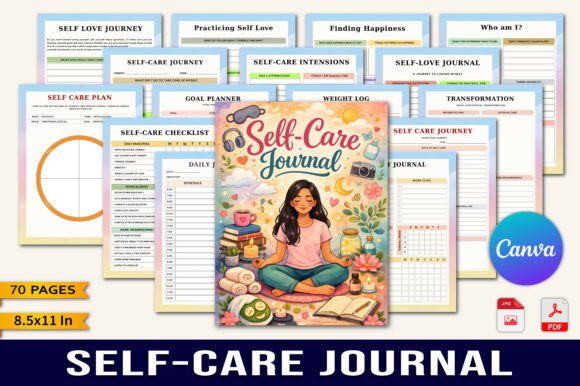
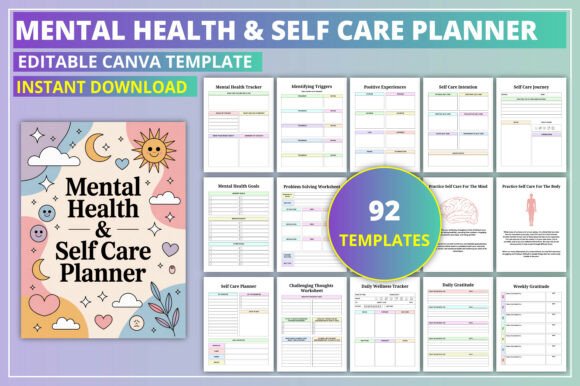
A Mental Health Self Care Planner is essentially a guided notebook that combines prompts, trackers, and worksheets designed to support mental wellness. What distinguishes the Mental Health Self Care Planner from a generic journal or a simple calendar is its integrated structure. Rather than a blank page where you write whatever comes to mind, this planner offers sections for mental health goals, symptom tracking, stress monitoring, gratitude lists, and even manifestation exercises. The version that is fully editable in Canva adds a layer of flexibility: you can adjust colors, fonts, and layouts to match your personal style or professional brand. This makes it a viable option not only for personal use but also for therapists, coaches, and content creators who want a consistent look across their materials.
How Does a Structured Planner Compare to Other Self-Care Approaches?
People manage their mental health in many ways. Some prefer a traditional paper diary where they free-write each evening. Others use a habit-tracking app on their phone. Many combine meditation, exercise, and regular therapy sessions without any single organizing tool. A Mental Health Self Care Planner sits somewhere between these extremes. It offers more guidance than a blank notebook but more flexibility than a rigid clinical worksheet.
One key distinction is the level of scaffolding. A free-form journal allows unlimited creative expression, but it can also feel overwhelming when you are unsure what to write about. A structured planner like this one gives you specific prompts: What triggers did I notice today? What am I grateful for? What limiting beliefs came up? For someone who wants direction without losing the ability to personalize, this middle ground can be ideal.
Compared to a digital app, a printable or editable planner has the advantage of being offline and tactile. Writing by hand has been shown to improve memory and emotional processing for many people. However, a digital tool can offer reminders, data visualization, and cloud backup. The Mental Health Self Care Planner, when used as a Canva template, gives you the best of both worlds: you can edit it digitally and then print it, or you can keep it as a PDF and fill it in on a tablet. This dual capability is one of its stronger points if you are unsure whether you prefer paper or screen.
Strengths of a Purpose-Built Mental Wellness Planner
What makes a dedicated planner stand out is the intentional design of its sections. The Mental Health Self Care Planner includes over thirty distinct pages, ranging from a Mental Health Tracker and Stress Tracker to a Self-Esteem Worksheet and a Problem Solving Worksheet. This breadth means you do not have to invent your own reflection system. Each page serves a clear function, and together they cover many dimensions of mental health: emotional awareness, cognitive patterns, physical habits, and safety planning.
Another strength is the inclusion of less common but valuable sections, such as the Analyse of Problem Behavior worksheet and the My Safety Plan page. These go beyond simple mood tracking and address deeper behavioral and crisis-prevention needs. For someone who struggles with recurring negative patterns or who wants a concrete plan for difficult moments, these pages add practical value that a basic gratitude journal cannot offer.
For professionals like therapists or life coaches, the editable format is a practical advantage. You can customize the planner with your logo, adjust the language to fit your client demographic, and print copies as needed. This avoids the generic feel of mass-produced workbooks and allows you to present a cohesive resource that aligns with your coaching or therapeutic approach.
Tradeoffs and Limitations to Consider
No single resource works for everyone, and a Mental Health Self Care Planner has its own set of tradeoffs. The most obvious is the need for consistent engagement. A planner full of trackers and worksheets only helps if you actually fill them in. Some people thrive on daily tracking, while others find it tedious or even anxiety-provoking. If you tend to abandon journals after a week, a lighter-touch option might serve you better.
Another consideration is the level of emotional intensity. Pages like Challenging Thoughts Worksheet and Anxiety Journal can be deeply helpful, but they also require a certain readiness to confront difficult material. If you are in a particularly vulnerable state, working through these exercises without professional guidance might feel overwhelming. In that case, a simpler daily mood log or a supportive app with gentle prompts might be a more appropriate starting point.
The editable nature of the Canva template is a strength for some, but it also assumes a basic level of design comfort. If you are not familiar with Canva or prefer a ready-to-print solution, you may need to invest time in learning the interface or adjusting templates. The planner comes with high-quality files for KDP upload or print, so you can skip the editing step entirely if you choose. But if you want full customization, be prepared for a bit of setup.
Cost is another factor. A printable or editable planner is typically a one-time purchase, which can be more economical than subscription-based mental health apps. However, some apps offer community support, guided sessions, and automatic reminders that a static document cannot replicate. Weighing the features of each against your budget and habits is a worthwhile step before deciding.
When Is This Planner the Right Choice?
A Mental Health Self Care Planner tends to work well for people who appreciate structure and variety. If you like having a clear prompt each day but also want the freedom to skip or repeat pages as needed, this format gives you that control. It is especially practical if you are working on specific goals, such as reducing anxiety, building self-esteem, or identifying triggers. The dedicated trackers make it easier to see patterns over weeks and months.
For therapists and coaches, this planner can serve as a take-home resource for clients. The editable template allows you to tailor the content to the populations you serve. For example, you might adjust the language to be more accessible for teens or more clinical for adults in a therapy program. The ability to brand the document also adds a professional touch that reinforces your practice identity.
If you are someone who enjoys personalization and design, the Canva editable format is a clear draw. You can change the color palette to something calming, adjust font sizes for readability, and rearrange sections to suit your workflow. This level of customization is rarely available in off-the-shelf printed planners.
When Might You Need a Different Approach?
There are situations where a different tool might serve you better. If you are in acute distress or dealing with a mental health crisis, a self-guided planner is not a substitute for professional support. Safety planning worksheets can be useful, but they work best as a supplement to therapy, not a replacement.
If your primary need is habit tracking for physical health, such as exercise and sleep, a simpler fitness tracker or a specialized habit app may be more efficient. The Mental Health Self Care Planner includes exercise and meditation trackers, but its focus is broader. For someone who wants a single-purpose tool, a streamlined alternative might feel less cluttered.
For those who prefer a completely unstructured, creative approach to self-reflection, the guided prompts might feel too prescriptive. If you thrive on open-ended writing or art-based expression, a blank journal or a sketchbook could be a better fit. The key is to match the tool to your personal style rather than forcing yourself into a system that does not resonate.
Practical Decision Factors
As you evaluate whether a Mental Health Self Care Planner is right for you, consider these points:
- Your current habits: Do you already use a journal or planner regularly? If yes, this will likely fit into your routine. If not, start with a single section rather than trying to use all pages at once.
- Your comfort with digital tools: If you enjoy Canva or similar design platforms, the editable version adds value. If not, the print-ready files work perfectly without any editing.
- Your goals: Are you trying to understand your triggers, reduce stress, build gratitude, or all of the above? The planner covers many areas, so you can pick and choose what matters most.
- Your budget: A one-time purchase for a high-quality template is often more affordable than a monthly app subscription. Compare the long-term cost based on how long you plan to use it.
- Your support network: If you are working with a therapist or coach, ask whether they recommend structured worksheets. Many professionals appreciate having a resource that clients can bring to sessions.
A Realistic Look at Daily Use
To give you a concrete sense of how this planner might work in practice, imagine someone using it for a month. On the first day, they fill out the Belongs To page and set a few mental health goals. Each morning, they spend five minutes noting their mood and any physical symptoms. In the evening, they write down one thing they are grateful for and reflect on any triggers they encountered. Once a week, they complete a longer worksheet, such as the Self-Esteem Worksheet or the Anxiety Tracker. Over time, they start to notice patterns: certain situations consistently raise stress, and certain self-care activities reliably improve mood. The planner becomes a record of progress rather than just a to-do list.
Compare that to someone who uses only a daily mood-tracking app. They get a quick snapshot of their emotional state each day, but they miss the deeper reflection prompts and the space to analyze behavior. Both approaches have value, but the planner offers a more comprehensive picture for those who are ready to engage with it.
Making an Informed Choice
The best mental health tool is the one you actually use consistently. A Mental Health Self Care Planner provides a structured, flexible, and customizable framework for tracking and improving your well-being. Its strength lies in the breadth of its sections and the ability to tailor it to your needs. At the same time, it requires a willingness to engage with the material regularly and to face some uncomfortable thoughts.
If you are comparing options, think about your own habits, goals, and comfort level with guided exercises. For some, this planner will be a transformative resource. For others, a simpler journal or a digital app may feel more natural. The important thing is to choose a method that supports your mental health without adding pressure or guilt. No planner can replace professional care, but the right one can be a valuable companion on your journey toward balance and self-awareness.