Evaluating the Research Notebook KDP Interior for Your Publishing Needs
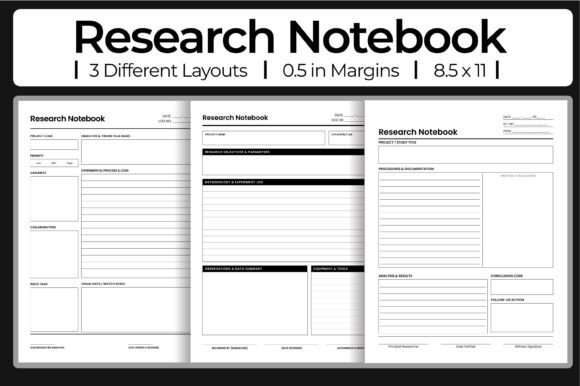
When you decide to publish a research notebook through Amazon KDP, the interior layout is one of the most important decisions you will make. The Research Notebook, KDP Interior refers to a ready-made set of files designed to help you create a printed notebook for recording experiments, observations, project notes, or lab data. This type of product includes multiple layout options, high-resolution PDF and JPG files, and a specification tailored for KDP's print requirements. Understanding what this interior kit offers, and what it does not, can help you decide whether it fits your specific project.
What the Research Notebook, KDP Interior Typically Includes
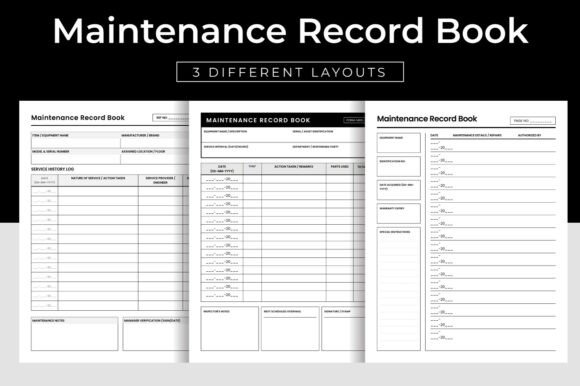
Most Research Notebook KDP Interior kits provide three distinct layouts, each contained in a separate PDF file. Each PDF is 120 pages long, though you can adjust the page count if needed. The package also includes three JPG versions of the covers or interior pages, all at 300 DPI resolution. The files are sized at 8.5 inches by 11 inches with no bleed, which is a standard interior size for many KDP paperback books. The files are described as high resolution, ready to upload, and suitable for Amazon KDP. They are also customizable, meaning you can edit them to add your own branding, title, or specific section headers if you have the right software.
These interiors are built around specific themes: a Research Notebook, a Research Log, a Lab Research Journal, a Science Research Notebook, and a Research Project Tracker. The inclusion of multiple layouts means you can choose the format that best matches the way you or your audience will use the notebook. For example, a lab research journal might have more space for procedural notes, while a research project tracker may include fields for milestones, dates, and status updates.
Reasons to Consider a Research Notebook, KDP Interior
If you are a self-publisher looking to create a specialized journal or notebook quickly, a pre-designed interior can save significant time. Instead of designing each page from scratch, you get a set of consistent, print-ready templates. The availability of three layout options gives you flexibility to test different formats or to offer multiple versions of your book without needing to redesign each one.
Another reason to be interested is the print-ready nature of the files. The no-bleed specification and 300 DPI resolution mean that the pages should render clearly in print, with no missing margins or fuzzy text. This reduces the risk of formatting errors during the KDP upload and review process. For someone publishing a research notebook for the first time, this can remove a layer of uncertainty.
Additionally, the inclusion of JPG files can be useful if you need to preview the layout on your website, create mockup images, or use the pages in digital formats. The customization potential also means you can adapt the interior to your own branding or niche without starting from scratch.
Benefits and Practical Advantages
One of the main benefits is the time saved in production. Creating a 120-page interior with multiple layouts could take hours of manual work in design software. With this kit, you can upload the files almost immediately after adding your own cover and metadata.
Another advantage is the consistency across pages. Because the interior is designed as a cohesive set, each page follows the same visual logic. This creates a professional and orderly feel for the reader, which is especially important for a research notebook where structure aids usability.
The high resolution ensures that lines, boxes, and text remain sharp, even if you later decide to print at a smaller scale or use the files for other purposes. The no-bleed format also simplifies the upload process because you do not need to worry about content extending into the trim margin.
Tradeoffs and Considerations
While a pre-designed interior offers convenience, it also comes with limitations. The three layouts may not cover every possible use case. For instance, if your research notebook requires specific sections that are not represented in any of the provided layouts (such as a chemical safety checklist or a complex data table), you may need to modify the files or blend layouts from different PDFs. This requires software skills and may reduce the time advantage.
The no-bleed specification is standard for interiors, but if you plan to include full-page images or color backgrounds that extend to the edge of the page, you would need a different format. This interior is best suited for black-and-white or simple color pages where text and lines are the main elements.
Another consideration is the page count. At 120 pages per layout, you get a substantial notebook, but some authors may prefer a shorter or longer book. While the product description notes that you can increase or decrease the pages, doing so may require editing each PDF individually, which is not always straightforward if the files are not fully editable.
The files are described as customizable, but the level of ease depends on the software you use. If you have experience with PDF editors or design tools like Adobe InDesign or Affinity Publisher, you can make changes. If you are limited to basic tools, you may find customization more difficult.
Expectations When Using This Interior
When you purchase or acquire a Research Notebook KDP Interior kit, expect to receive three PDF files and three JPG files. The PDFs are the actual interior pages, and the JPGs are likely cover or sample images. You will still need to create or obtain a separate book cover that matches the interior's size and style. The interior files do not include a cover by default.
You should also expect that the layouts are designed for practical use. The Lab Research Journal layout might include sections for date, experiment title, procedure, observations, and conclusions. The Research Project Tracker layout could include fields for project name, start date, end date, status, notes, and next steps. The Science Research Notebook layout may offer a more general structure with lined or grid paper for freeform notes.
The files are ready to upload to KDP, but you should still preview each page before publishing. Check that all text and lines are clear, that there are no unintended blank pages, and that the page order makes sense for your intended use.
Strong Fit Situations
This interior is a strong fit if you are publishing a dedicated research notebook for a specific audience, such as students, scientists, engineers, or project managers. If your goal is to offer a structured space for recording experiments, tracking research tasks, or documenting lab work, the layouts will likely meet those needs.
It is also a good choice if you want to test different formats without committing to a single design. Because you get three layouts in one kit, you can publish multiple versions of your notebook under different titles or for different markets. This can help you gather data about which format resonates best with buyers.
Authors who value consistent, professional formatting and want to minimize production errors will appreciate the print-ready quality. If you are short on time or lack design skills, this interior removes a significant barrier to entry.
Alternatives Worth Considering
If your research notebook needs a very specific layout that is not covered by the three options, you might be better off designing your own interior using a flexible tool like Canva, Microsoft Word, or Google Docs. This gives you full control over every element, though it requires more time and effort.
Another alternative is to purchase a different interior kit that offers more layouts or a different style, such as dot grid pages, lined pages with margin space, or specialized data entry forms. You can find many pre-designed interiors on creative marketplaces that cater to niche needs.
If you plan to include complex graphics, diagrams, or color coding, you may need a bleed-enabled interior or a custom layout that accommodates full-page elements. The no-bleed format of this kit limits your ability to use edge-to-edge design.
Hiring a freelance designer to create a custom interior is another route. This costs more but gives you a unique product that aligns exactly with your vision. For publishers building a brand around multiple notebook titles, a custom design can provide a consistent look across your series.
Practical Decision-Making Insights
To decide if this interior aligns with your goals, start by defining the purpose of your research notebook. Who will use it, and what will they record? Compare your requirements with the three layouts provided. If one or more layouts match your needs, the kit is a practical option. If none of them fit, you will likely need a different solution.
Consider your own comfort level with file editing. If you are confident in using PDF or design software, the customization potential is a real benefit. If you are not, you may need to accept the layouts as-is or find a different product that offers more flexibility.
Think about your timeline. If you need to publish quickly, a ready-to-upload interior can accelerate your schedule. If you have more time and a specific vision, custom design might yield a better result.
Finally, consider your budget. Pre-designed interiors are typically affordable compared to hiring a designer. For a low-investment entry into notebook publishing, this kit provides a solid foundation.
Assessing these factors against the features of the Research Notebook KDP Interior will help you determine whether it is the right choice for your project or whether an alternative approach would serve your readers better.