How the Pinterest Growth Blueprint Workbook Structures a Strategic Content Marketing Workflow
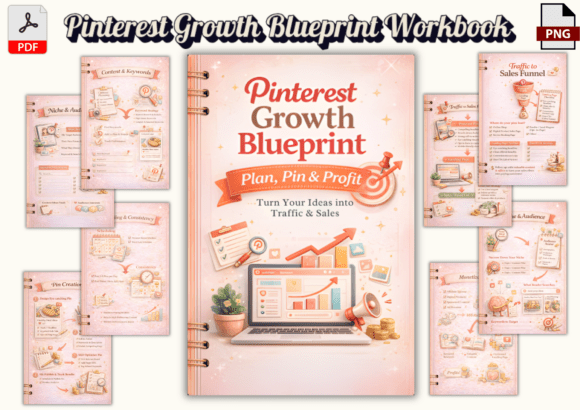
Building a sustainable presence on Pinterest often feels like navigating a shifting landscape of algorithm updates, trending aesthetics, and fluctuating engagement patterns. Yet the creators, bloggers, and small business owners who treat Pinterest as a deliberate channel rather than a casual posting board consistently see returns in traffic and revenue. The Pinterest Growth Blueprint Workbook is a structured tool designed to bridge the gap between sporadic pinning and a repeatable growth system. Its 17 pages, sized at 6x9 inches for both digital annotation and physical printing, offer a complete framework for moving from vague goals to measurable outcomes.
From Ambition to Action: The Goal-Setting Foundation
Many Pinterest strategies fail not because of poor pin design or weak keywords, but because the underlying objectives are undefined. The workbook addresses this directly with dedicated goal-setting worksheets that push users to articulate what success actually looks like. Whether the aim is to drive 5,000 monthly visitors to a blog post, build an email list of 200 subscribers, or generate consistent affiliate commissions, putting those numbers on paper transforms abstract ambition into a target that can be reverse-engineered.
These worksheets also force a reality check: they ask users to evaluate current performance, available time, and content inventory before setting milestones. For a busy professional juggling a side business, this step prevents the common trap of overcommitting to a pinning schedule that cannot be sustained. For a full-time content creator, it provides clarity on which metrics matter most—saves, outbound clicks, or direct sales.
Niche Exploration and Keyword Planning as a Creative Filter
One of the workbook’s most practical sections is the niche brainstorming and keyword planning pages. These guides walk users through identifying micro-niches within broader topics—for instance, moving from “healthy recipes” to “30-minute gluten-free dinners for meal prep.” This level of specificity is what distinguishes a Pinterest account that blends into the noise from one that captures a dedicated audience seeking exactly that content.
The keyword research guidance goes beyond simple volume checks. It encourages users to analyze search intent: are people looking for tutorials, product recommendations, inspiration, or troubleshooting? By aligning pin content with the stage of the search journey, creators can craft pins that rank well in Pinterest searches while also satisfying the user’s deeper need. The workbook provides blank templates for recording keyword clusters, related searches, and seasonal trends—making this research a living document rather than a one-time exercise.
The 30-Day Growth Planner: Consistency Without Burnout
A workbook full of worksheets is only valuable if it leads to daily action. The 30-day Pinterest growth planner embedded in the Pinterest Growth Blueprint Workbook translates strategic decisions into a manageable daily rhythm. Each day includes prompts for specific tasks: reviewing analytics, creating one new pin, updating old pins with fresh keywords, engaging with niche communities, or testing a new pin format. This micro-habit approach prevents the overwhelm that often accompanies Pinterest marketing.
For example, a small business owner selling digital planners might spend day one identifying three new long-tail keywords related to “business goal setting templates.” On day five, they create a before-and-after pin showcasing how their product helps organize a workspace. By day fifteen, they are analyzing which pin format—static image, video, or carousel—generates the highest click-through rate. The planner doubles as a tracking log, so patterns become visible over time. A blogger might notice that weekends yield higher saves, prompting a shift in publishing schedule.
Content Planning Calendar and Pin Strategy Templates
Beyond daily tasks, the workbook provides a monthly content planning calendar and pin strategy templates that help users batch their efforts. Batching is one of the most effective ways to maintain Pinterest consistency while writing blog posts, filming videos, or fulfilling orders. The calendar layout includes space for noting seasonal events, product launches, and content pillars. This prevents the last-minute scramble for a pin topic when inspiration runs dry.
The pin strategy templates break down the anatomy of a high-performing pin: headline hooks, visual composition, text overlay readability, and call-to-action placement. By repeatedly applying this template, users internalize the design principles that lead to higher engagement. Over time, the process becomes intuitive, and the workbook serves as a refresher whenever performance dips.
Pin Design Principles Rooted in Engagement Data
Visual content is the currency of Pinterest, but not every pretty pin performs well. The workbook’s section on pin design tips moves beyond generic advice like “use bright colors” and into actionable heuristics. It explains why vertical aspect ratios (2:3) dominate the feed, how text overlays should be tested for readability on mobile screens, and when to use video pins versus static images. Real-world examples from the workbook’s own design—consistent color palette, clean layouts, clear typography—serve as a reference.
A noticeably effective tip is the emphasis on “pin context.” The workbook encourages creators to think about what the user is doing when they encounter the pin. Are they meal planning on a Sunday afternoon? Searching for a birthday gift during a work break? This context influences whether the pin should highlight a quick win, a detailed tutorial, or a product sale. The analytics tracker included in the workbook helps correlate pin design choices with actual metrics, turning guesswork into a feedback loop.
Audience Targeting and Keyword Research Guides for Precision
Pinterest’s search engine behaves differently from Google in one crucial way: it prioritizes fresh, relevant content for niche queries. The audience targeting and keyword research guides in the workbook teach users to build keyword clusters around their specific audience’s intent. For a researcher compiling resources on sustainable living, this might mean targeting phrases like “zero waste kitchen swaps” and “eco-friendly cleaning essentials” rather than the broad term “sustainability.”
The workbook also introduces the concept of “audience personas” within the Pinterest context. Instead of vague demographics, it asks users to define what their ideal follower is searching for, pinning, and buying. This exercise makes the keyword research tangible. A hobbyist who knits and sells patterns would identify the exact terms their customers use: “beginner knitting patterns,” “chunky yarn scarf tutorial,” “knit gifts for Christmas.” These keywords then inform board titles, pin descriptions, and even the naming of image files before upload.
The Traffic-to-Sales Funnel: Moving Beyond Vanity Metrics
Pinterest success is often measured in saves and impressions, but the workbook dedicates several pages to the traffic-to-sales funnel. This is where the strategy shifts from content distribution to revenue generation. The funnel planning pages guide users through mapping each pin to a specific stage: awareness (inspiration), consideration (tutorials or comparisons), and conversion (product pages or lead magnets).
A creator selling an online course, for example, would create pins that attract curiosity (a statistic about the problem the course solves), build trust (a free checklist download), and finally lead to the checkout page. The workbook provides space to outline this flow for up to five different products or services. It also includes a simple conversion tracking template that links pin performance to actual sales—something many Pinterest strategies overlook. For a small business owner selling physical products, this section alone can justify the cost of the workbook by revealing which pins drive the most profitable traffic.
Monetization Strategies: Affiliate Links, Digital Products, and Paid Ads
The final pages of the Pinterest Growth Blueprint Workbook tackle monetization head-on, covering three primary revenue streams: affiliate marketing, digital products, and Pinterest ads. Each strategy is broken down into actionable steps rather than theoretical overviews. For affiliate marketers, the workbook explains how to disclose links while still creating trust, how to choose affiliate programs that align with niche content, and how to track commissions directly from pin clicks.
For digital product creators—those selling planners, printables, templates, or courses—the workbook offers a product launch pin sequence. This includes teaser pins, educational pins, and a dedicated sales pin that links directly to the product. The 6x9 format allows for easy printing and annotation, which is particularly useful when mapping out a launch timeline. The ads section is introductory but practical, teaching users how to test a single pin with a small daily budget before scaling. It emphasizes the importance of using the same keyword research from earlier pages to target ads effectively.
Who Benefits Most from This Workbook
The workbook’s design intentionally avoids a one-size-fits-all approach. Bloggers will find the content calendar and keyword templates immediately applicable to their traffic goals. Small business owners can leverage the funnel and monetization pages to turn Pinterest into a sales channel rather than just a branding exercise. Content creators and educators can use the niche brainstorming sessions to refine their topic authority. Hobbyists who want to share their passion—whether it’s gardening, candle making, or historical costuming—will appreciate the structured approach to growing an audience without feeling like they are “selling out.”
Even researchers or professionals who use Pinterest for visual inspiration and idea generation (mood boards, design references, lesson planning) can adapt the strategy templates to organize their boards in a way that attracts collaboration or speaking opportunities. The workbook is flexible enough that a college student building a portfolio can use the same goal-setting pages as a veteran e-commerce brand.
Practical Observations from Using the Workbook
When creators work through the pages sequentially, a pattern emerges: the first week typically involves heavy planning and keyword discovery, followed by a burst of pin creation and scheduling. By the third week, most users start seeing marginal increases in impressions, but the real shift happens in month two, when the repeated use of the analytics tracker reveals which keywords and formats are gaining traction. Users who skip the analytics section often miss this feedback loop and plateau.
Another observation is that the 30-day planner works best when paired with the keyword research pages. Users who simply follow the daily prompts without adjusting for their niche’s seasonality may still grow, but those who actively update their keyword clusters based on emerging trends see faster results. The workbook’s structure supports this iterative process, but it does not automate it—the user must bring curiosity and a willingness to test.
Considerations Before Downloading
Because the Pinterest Growth Blueprint Workbook is a digital download delivered as PDF and PNG files, users should have a basic comfort with digital note-taking (using apps like GoodNotes, Notability, or Adobe Acrobat) or access to a printer. The 6x9 size is compact enough to fit in a standard binder but large enough for detailed notes. The inclusion of front and back cover designs makes it suitable for printing as a standalone planner.
For teams or agencies managing multiple client accounts, the workbook’s pages can be duplicated for each client—a flexibility that the instant download format supports. However, the content assumes a single user perspective, so agencies will need to adapt the goal-setting sections for each brand. The keyword research and analytics templates are the most transferable across accounts.
The Role of the Workbook in a Broader Pinterest Strategy
No workbook can replace the need for original visual assets, consistent pinning, and ongoing learning. What the Pinterest Growth Blueprint Workbook offers is a container for those efforts—a way to organize, track, and refine them systematically. It sits alongside tools like Tailwind for scheduling, Canva for design, and Google Analytics for performance measurement. Its value is in the clarity it brings to the process, not in shortcuts or magic formulas. For anyone serious about turning Pinterest into a reliable traffic and revenue channel, this structured workbook provides a practical starting point that grows with the user’s experience.