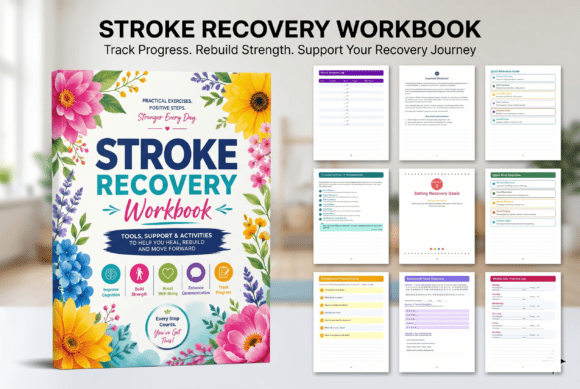
Stroke Recovery Workbook: A Practical Guide for Rebuilding Strength and Independence
Recovering from a stroke is a deeply personal journey—one that often requires patience, consistent effort, and the right tools. For survivors, caregivers, and rehabilitation professionals alike, finding structured guidance that respects both the physical and emotional aspects of recovery can make all the difference. The Stroke Recovery Workbook offers exactly that: a comprehensive resource filled with hands-on exercises, cognitive challenges, and practical strategies designed to support meaningful progress. Whether you are in the early stages of rehabilitation or months into your journey, this workbook provides a clear pathway toward regaining skills and confidence.
What Makes the Stroke Recovery Workbook Unique?
Unlike generic rehab materials, the 🌸 Stroke Recovery Workbook ✨ is built around the real challenges that survivors face every day. It does not assume a one-size-fits-all approach. Instead, it recognizes that recovery unfolds across multiple domains—physical, cognitive, speech, and fine motor skills—and offers targeted exercises for each area. The workbook is structured to be both accessible and progressive, allowing users to start where they feel comfortable and gradually increase difficulty as they improve.
One of its standout characteristics is the focus on practical, real-world tasks. Rather than abstract drills, the workbook incorporates activities like buttoning a shirt, reading aloud, or sketching a clock face. These exercises are designed to translate directly into daily life, making each session feel purposeful and rewarding.
Who Can Benefit from the Stroke Recovery Workbook?
The 🌸 Stroke Recovery Workbook ✨ is suitable for a wide audience:
- Stroke survivors looking for a self-guided or family-supported recovery plan
- Caregivers and family members who want to assist meaningfully without overwhelming their loved one
- Occupational and physical therapists seeking a structured supplement for home practice
- Speech-language pathologists who need ready-to-use oral motor and language exercises
- Support groups and community centers offering rehabilitation resources to members
The workbook can be used in home settings, outpatient clinics, skilled nursing facilities, and even during telehealth sessions. Its flexible format means that exercises can be adapted to individual energy levels and abilities.
Physical Rehabilitation Exercises: Building Strength Step by Step
The physical recovery section of the Stroke Recovery Workbook is carefully divided by body region, ensuring that no area is neglected. Here is a closer look at what it covers:
Upper Body Strength and Range of Motion
Exercises include shoulder shrugs, arm raises, elbow bends, and wrist circles. These movements help rebuild muscle memory and joint flexibility, which are often compromised after a stroke. The workbook encourages slow, controlled repetitions and suggests using a mirror for visual feedback.
Lower Body Mobility
To improve walking and standing, the workbook introduces knee marches, leg extensions, and calf raises. These can be performed while seated or standing with support, making them accessible for individuals with varying balance levels.
Balance and Coordination
Regaining stability is critical for preventing falls. The workbook includes exercises like standing weight shifts, tandem standing (heel-to-toe), and the Clock Reach exercise—where the survivor reaches in different directions as if touching numbers on a clock face. These drills challenge the vestibular system and build confidence in upright positions.
Hand and Fine Motor Skills: Reclaiming Dexterity
Fine motor control often requires dedicated practice after a stroke. The Stroke Recovery Workbook addresses this through daily tasks that are both functional and therapeutic:
- Buttoning shirts and zipping closures
- Using utensils during meals
- Turning pages in a book or magazine
- Tracing patterns—straight lines, zigzags, and circles
- Writing letters and numbers by hand
These exercises promote neural reorganization and help rebuild the hand–brain connection. For survivors who experience spasticity or weakness, the workbook offers modifications such as using adaptive grips or practicing with larger objects first.
Speech and Cognitive Training: More Than Just Words
Communication and thinking skills are often deeply affected by stroke. The workbook provides structured activities that target three core areas:
Oral Motor Exercises
To strengthen the muscles used for speaking, the workbook guides users through exaggerated smiles, puckering lips, and moving the tongue side-to-side. These exercises improve articulation and reduce slurring over time.
Word Finding and Reading
Language retrieval is stimulated by exercises such as listing items in categories (animals, foods, emotions) and reading passages aloud at varying difficulty levels. This helps rebuild vocabulary and fluency.
Brain Training and Visual Skills
Cognitive function is addressed with tasks like number sequence recall, letter cancellation, and simple math problems. Visual–spatial skills are honed through Clock Drawing—a classic assessment tool that simultaneously tests memory, planning, and motor execution. The workbook also includes activities for practicing attention and problem-solving in everyday contexts.
Real-World Scenarios: How the Workbook Comes to Life
Consider the case of Maria, a 68-year-old retired teacher who experienced a left-hemisphere stroke affecting her right side and speech. Using the 🌸 Stroke Recovery Workbook ✨ at home with her husband, she began with upper body exercises while seated at the kitchen table. Within weeks, she progressed to standing balance drills. Simultaneously, the oral motor exercises helped reduce her lip weakness, and the category-listing tasks improved her ability to find words during conversation. Maria’s occupational therapist noted that the workbook gave her a clear structure for daily practice—something that generalized therapy alone could not provide.
Another example involves a community stroke support group that adopted the workbook for weekly meetings. Members worked through the Clock Reach exercise together, offering encouragement and sharing strategies for managing fatigue. The group leader found that the workbook’s clear instructions made it easy for volunteers with minimal training to facilitate sessions safely.
Strengths, Considerations, and Practical Expectations
The Stroke Recovery Workbook excels in several areas:
- Comprehensiveness: It covers physical, cognitive, speech, and fine motor domains in one resource.
- Accessibility: Instructions are simple, and exercises can be performed with minimal equipment.
- Progression: Activities are organized so that users can advance at their own pace.
- Real-life relevance: Tasks mirror daily activities, improving transfer of skills to everyday life.
However, there are a few considerations to keep in mind. The workbook may not be suitable for survivors with severe cognitive impairments who require fully guided, one-on-one support. In such cases, the workbook is best used under the supervision of a therapist. Additionally, physical exercises should always be reviewed by a healthcare professional to ensure safety—especially for individuals with balance issues, osteoporosis, or cardiac concerns.
Another limitation is that the workbook does not address emotional or psychological recovery in depth. While the act of completing exercises can boost mood and motivation, survivors experiencing depression, anxiety, or emotional lability may benefit from complementary resources such as counseling or peer support groups.
How to Evaluate Suitability for Your Needs
When considering whether the 🌸 Stroke Recovery Workbook ✨ is right for you or someone you care for, ask the following questions:
- What is the current recovery stage? Early-stage survivors may need more assistance, while those further along can use the workbook independently.
- Which domains need the most attention? If fine motor skills are a priority, check that the workbook includes enough hand exercises. The same goes for speech or balance.
- Is professional guidance available? The workbook works best as a supplement to therapy, not a replacement.
- Does the survivor have sensory or perceptual challenges? Some exercises rely on visual or auditory cues—ensure modifications are available if needed.
- What is the preferred format? If digital access is preferred, confirm that a PDF or online version is available.
Final Thoughts on the Stroke Recovery Workbook
The Stroke Recovery Workbook stands out as a thoughtfully designed tool that honors the complexity of recovery. It does not promise quick fixes or miraculous results—instead, it offers steady, structured support that can be woven into everyday life. By addressing the full spectrum of recovery needs, from physical strength to cognitive sharpness, it empowers survivors to take an active role in their own healing. For professionals, caregivers, and survivors alike, this workbook is a valuable companion on the path toward greater independence and quality of life.