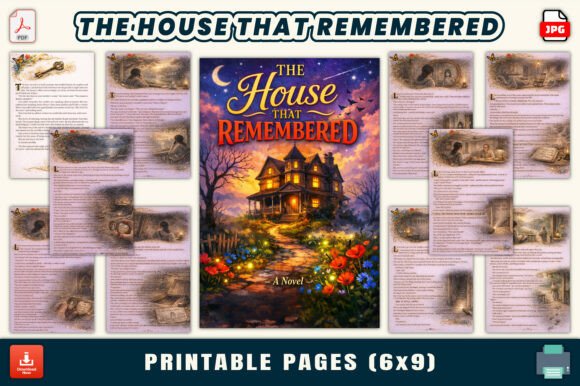
The House That Remembered: A Ghost Story That Stays With You
Some stories don't just creep into your mind—they settle into the spaces between your thoughts and linger long after you've turned the last page. The House That Remembered is one of those rare finds. It's a 30-page ghost story that unfolds inside an old riverside house, where the walls seem to hold their breath and the floorboards remember every footstep that ever crossed them. If you've ever been drawn to tales that feel both deeply personal and unsettlingly familiar, this storybook is worth your attention.
What makes this particular ghost story stand out isn't just the supernatural mystery at its core. It's the way the narrative weaves silence and shadow into something that feels almost tangible. The knocking sounds, the buried memories, the ghost that refuses to be forgotten—each element is crafted to pull you deeper into a world where family secrets and supernatural forces collide. And for anyone who has ever loved a good haunted house tale, that kind of immersion is exactly what you're looking for.
A Story That Works for Different Readers in Different Ways
One of the more interesting things about The House That Remembered is how it adapts to whoever is holding it. A 30-page format means it's digestible in a single sitting, but the emotional weight and suspenseful pacing make it feel much larger than its page count. For a busy adult who rarely has time to sink into a full-length novel, this story offers a complete experience without demanding a week-long commitment. You can read it over a quiet evening, maybe with a cup of tea and the lights dimmed, and walk away feeling like you've just stepped out of a different world.
For horror enthusiasts, the appeal is more about atmosphere and craft. The old riverside setting isn't just a backdrop—it's a character in its own right. The house remembers, and that memory becomes a driving force in the story. Readers who appreciate slow-burn tension, emotional horror, and supernatural twists will find plenty to sink into. The storytelling leans into what makes ghost stories timeless: the sense that something unseen is watching, waiting, and holding onto truths that the living have tried to bury.
And for those who enjoy collecting or sharing stories, this format hits a sweet spot. It's long enough to feel substantial, but short enough to recommend to a friend who says they want to try something creepy but don't know where to start.
Why the 30-Page Format Matters More Than You Might Think
There's something to be said for a story that knows exactly how long it needs to be. The House That Remembered doesn't pad its pages with unnecessary scenes or drag out the mystery just to hit a word count. Every page moves the narrative forward, deepening the sense of unease and revealing just enough to keep you guessing. That kind of disciplined storytelling is rare, and it's one of the reasons this book works so well for so many different uses.
Printable book projects benefit from this conciseness. If you're a creator or publisher looking for material that can be formatted into a polished booklet, a 6x9-inch layout with 30 pages is almost ideal. It fits neatly into standard printing workflows, and the story itself has enough weight to stand alone as a product. Digital sellers, too, will find that the JPG and PDF formats make it easy to deliver a consistent reading experience across devices. Whether someone reads it on a tablet, a phone, or a printed page, the story holds its shape.
Real-World Situations Where This Story Finds Its Home
Let's talk about the kinds of situations where The House That Remembered becomes more than just a book on a virtual shelf. Because honestly, a ghost story doesn't exist in a vacuum—it lives in the moments when someone chooses to sit down and let themselves be unsettled.
Consider the reader who loves to host small gatherings. Maybe they're putting together a themed evening for friends—something atmospheric, with low lighting and a little bit of tension in the air. A story like this can be the centerpiece of that experience. Read aloud in a quiet room, the knocking sounds and the riverside setting take on a new dimension. The group shares the unease, and the conversation afterward is half the fun. That's a use case that isn't often discussed, but it's one of the most memorable ways to experience a ghost story.
Then there's the solo reader who uses horror as a way to reset. It might sound counterintuitive, but a well-written scary story can be oddly grounding. It pulls your attention away from everyday stress and into a world where the stakes are different—more primal, more elemental. The House That Remembered offers that kind of escape. The emotional horror at its core isn't just about fear of the supernatural; it's about confronting things that have been hidden, forgotten, or silenced. For someone who needs a break from the noise of daily life, that focused tension can be surprisingly refreshing.
Different Audiences, Different Reasons to Pick It Up
Let's break down a few specific audiences and why this story might appeal to each of them.
Horror and ghost story readers are the obvious audience, but within that group, there's a wide range of tastes. Some readers love psychological horror that leaves you questioning what's real. Others prefer the classic haunted house setup with creaking floors and cold drafts. The House That Remembered bridges both styles. The family secret at its heart gives it a psychological edge, while the supernatural elements keep it firmly rooted in ghost story tradition. It's a combination that works well for readers who want more than just jump scares.
Creative professionals and publishers will see this as a versatile piece of content. If you're building a collection of printable horror stories, this 30-page book fits naturally alongside other short works. Its 6x9-inch format is standard enough to slot into most catalog layouts, and the illustrated-style presentation adds a layer of visual appeal that plain text sometimes lacks. For someone who sells digital downloads or printable booklets, having a story that reads well and looks good on the page is a practical advantage.
Writers and storytellers might pick this up for a different reason entirely. Reading a well-constructed ghost story is one of the best ways to study pacing, atmosphere, and emotional beats. The House That Remembered demonstrates how to build suspense without relying on cheap tricks, how to develop a setting that feels alive, and how to handle a supernatural reveal with restraint. For anyone working on their own horror or mystery project, there's value in seeing how another writer handles those same challenges.
Strengths That Make It Work
The strongest aspect of this story is its atmosphere. The old riverside house isn't just described—it's felt. The silence, the shadows, the sense that something is waiting just out of sight—those details are what keep readers turning pages. If you're someone who values mood over action, who prefers a slow, creeping dread over a fast-paced thriller, this story delivers exactly that.
Another strength is the emotional layer beneath the horror. The ghost in this story isn't just a spooky presence. It's tied to a family secret, and that connection gives the narrative a weight that pure supernatural tales sometimes lack. Readers who appreciate horror that makes them feel something beyond fear—sadness, regret, a sense of loss—will find that The House That Remembered offers more than just chills.
The format itself is a practical strength. 30 pages is long enough to develop a complete story arc, but short enough to read in one sitting. That makes it accessible for people who don't have the time or energy for a 300-page novel but still want a satisfying narrative experience. And the availability of both JPG and PDF formats means it works across a range of devices and printing setups.
What to Keep in Mind Before You Dive In
No story is perfect for every situation, and it's worth being honest about where The House That Remembered might not be the right fit. If you prefer horror that is fast-paced and action-heavy, with frequent supernatural encounters, the slower, atmospheric approach here might not match your expectations. This is a story that builds tension gradually, letting the silence and the setting do much of the work. That's a deliberate choice, and it works beautifully for the right reader, but it's not designed to deliver constant adrenaline.
Similarly, if you're looking for a story with a large cast of characters or a complex, multi-layered plot, the focused narrative here might feel limited. The strength of this book is its intimacy. It centers on a single location and a small number of characters, allowing the mystery to unfold in a contained space. That's part of what makes it so effective, but readers who prefer sprawling supernatural epics might want to adjust their expectations.
For digital sellers and publishers, one consideration is the visual presentation. The story is described as illustrated-style, but if you're expecting full-page artwork on every spread, it's worth confirming the format details before purchasing. The value here is primarily in the storytelling and the ready-to-use book format, not necessarily in heavy illustration. Understanding that upfront helps you make the most of what it offers.
Practical Ways to Use This Story in Your Own Projects
If you're a creator, publisher, or seller, there are several practical ways to work with The House That Remembered. You can include it as part of a themed horror collection, pairing it with other short ghost stories for a curated reading experience. The 6x9-inch format is easy to bundle into larger digital packs or print-on-demand listings.
For educators or workshop leaders, this story could serve as a case study in suspenseful writing. Its concise length makes it easy to analyze in a single session, and the supernatural mystery provides plenty of material for discussion about pacing, setting, and character motivation. If you run a creative writing group or a horror-themed book club, this is the kind of story that generates good conversation.
And for the individual reader, sometimes the best use is the simplest: a quiet evening, a comfortable chair, and a story that knows how to make the shadows feel a little deeper. The House That Remembered offers that experience without demanding much in return. Just your attention, and maybe a willingness to let the knocking sounds get under your skin.