Building Confidence and Focus: How the ADHD Planner Activity Book for Kids Transforms Daily Life
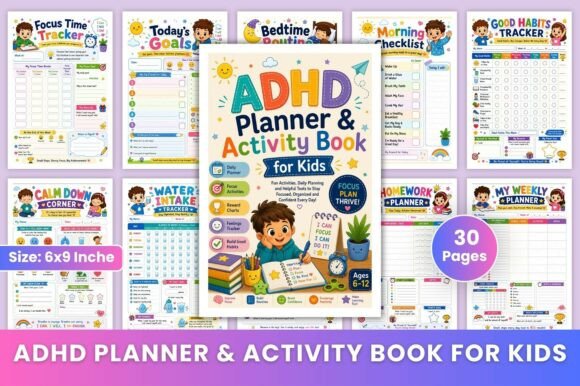
Every parent knows that raising a child comes with its own set of beautiful challenges. But when your child has ADHD, those challenges can feel magnified. Mornings become battles, homework turns into a marathon of distractions, and bedtime often feels like negotiating a peace treaty. If this sounds familiar, you are not alone — and more importantly, there are practical tools that can help. One such tool is the ADHD Planner Activity Book for Kids, a thoughtfully designed resource that goes far beyond simple scheduling. It is a colorful, structured, and engaging companion that helps children improve focus, build routines, manage emotions, and stay organized. Let us explore what makes this planner so effective and how it can become a daily anchor for your child.
Why a Traditional Planner Often Falls Short for Kids with ADHD
Standard planners are usually designed with neurotypical children in mind. They assume a certain level of executive function — the ability to plan ahead, prioritize tasks, and manage time. For a child with ADHD, those skills are precisely the ones that need the most support. A plain calendar or a simple to-do list can feel overwhelming, boring, or even punitive. The ADHD Planner Activity Book for Kids takes a completely different approach. It is built from the ground up to meet children where they are, using color, interactivity, and positive reinforcement to create a system that actually sticks.
The Daily Routine Planner: Bringing Structure to Chaos
One of the standout features of this workbook is the Daily Routine Planner. Structure is essential for children with ADHD because it reduces the mental load of constant decision-making. Instead of wondering what comes next, the child follows a clear, step-by-step plan that covers the entire day: morning, school, meals, homework, playtime, and bedtime routines. The visual layout helps children see their day as a manageable sequence rather than an overwhelming blur of activities. This is not about rigid control; it is about creating a predictable framework that allows flexibility within boundaries.
How the Morning Checklist Sets a Positive Tone
Mornings are often the most challenging part of the day. The Morning Checklist in the ADHD Planner Activity Book for Kids breaks down simple tasks like waking up, brushing teeth, getting ready, and starting the day with focus. Each task is a small win. When a child checks off "wake up" and then "brush teeth," they experience a sense of accomplishment that builds momentum. Over time, these micro-successes train the brain to associate mornings with competence rather than conflict. Parents report that using this checklist reduces the number of reminders they need to give, which in turn lowers household tension.
The Bedtime Routine Tracker for Better Sleep
Sleep is a critical component of ADHD management, yet it is often elusive. The Bedtime Routine Tracker guides children through healthy nighttime habits. It might include winding down, putting away screens, brushing teeth, reading, and relaxation exercises. By following a consistent sequence, the child's brain learns to shift from high-energy activity to restful calm. The tracker also gives children a sense of ownership over their bedtime — they are not just being told what to do; they are following their own plan. This shift from external to internal motivation is a powerful step toward independence.
Focus, Goals, and Emotional Awareness: The Heart of the Workbook
Beyond daily routines, the ADHD Planner Activity Book for Kids delves into the deeper skills that children need to thrive. Goals Focus Tracking encourages children to set daily goals, improve focus time, and complete tasks with motivation. The key here is that goals are broken down into bite-sized pieces. A goal like "finish math homework" becomes "complete three problems, then take a brain break, then complete three more." This chunking strategy is research-backed and works exceptionally well for children who struggle with sustained attention.
Tracking Focus Time to Build Concentration
The Focus Time Tracker is a simple yet powerful tool. It helps children record how long they can concentrate on a single task. Over days and weeks, they can see their own progress. This is incredibly motivating because it provides concrete evidence of improvement. A child who could only focus for five minutes in week one might manage eight minutes by week three. Seeing that growth on paper reinforces the idea that focus is a skill that can be developed, not a fixed trait. For parents, this tracker offers valuable insight into when their child is most alert and what types of tasks are easiest or hardest to concentrate on.
The Mood Feelings Check-In for Emotional Regulation
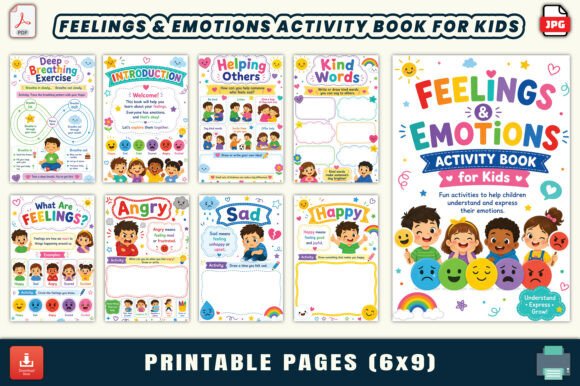
Emotional regulation is a major challenge for many children with ADHD. The Mood Feelings Check-In helps kids identify emotions and understand how they feel throughout the day. This is not about labeling feelings as good or bad; it is about building awareness. A child might circle "frustrated" after a difficult homework session and then note what helped them feel better. Over time, this practice builds emotional vocabulary and self-regulation skills. It also opens the door for conversations with parents. "I see you circled 'anxious' this morning. What was going on?" becomes a natural conversation starter rather than an interrogation.
Rewards, Brain Breaks, and Habits That Stick
One of the most engaging elements of the ADHD Planner Activity Book for Kids is the Reward Motivation Charts. This is not about bribing children to behave; it is about providing positive reinforcement that builds consistency. The chart might track things like completing morning tasks, finishing homework without meltdowns, or using kind words with a sibling. When a child earns enough stars or stickers, they get a small reward — extra screen time, a special outing, or a choice at dinner. The key is that the reward is tied to effort and consistency, not perfection. This system teaches children that their actions have positive consequences, which is a cornerstone of building self-esteem.
Why Brain Break Activities Matter
Sustained focus is hard for any child, but for a child with ADHD, it can be exhausting. The workbook includes Brain Break Activities — quick exercises like stretching, breathing, doodling, and movement that refresh the mind. These breaks are not distractions; they are strategic resets. The planner might suggest a one-minute deep breathing exercise after ten minutes of focus, or a quick doodle session between tasks. By scheduling these breaks, children learn to recognize their own energy cycles and take proactive steps to recharge. This is a lifelong skill that will serve them well into adulthood.
Building Good Habits That Last
The Good Habits Tracker is another feature that goes beyond daily planning. It helps children build routines around hygiene, study habits, kindness, and responsibility. A child might track "made my bed," "helped set the table," or "read for ten minutes." The tracker makes abstract concepts like responsibility concrete and measurable. Over weeks and months, these small actions become automatic. The ADHD Planner Activity Book for Kids essentially helps children create their own personal operating system — a set of routines and habits that reduce friction in daily life.
How the Planner Fits into a Modern Lifestyle
In today's fast-paced world, families are juggling school, extracurriculars, therapy appointments, and social commitments. The ADHD Planner Activity Book for Kids is designed to fit seamlessly into this busy landscape. It is portable enough to go in a backpack, and its colorful, engaging design makes it something children actually want to use — not a chore they avoid. Many parents use it as a collaborative tool, sitting down with their child each morning or evening to review the day together. This shared practice builds connection and communication.
Practical Considerations for Getting Started
If you are considering using this planner for your child, start small. You do not need to use every feature on day one. Perhaps begin with just the morning checklist and the mood check-in. Once those feel natural, add the focus tracker or the reward chart. The goal is to build a sustainable system, not to overwhelm. It is also important to involve your child in the process. Let them choose which stickers to use or which reward to work toward. When children feel a sense of ownership, they are far more likely to engage.
What Parents and Educators Are Observing
Many parents and educators who have used the ADHD Planner Activity Book for Kids report noticeable improvements in their child's sense of control and confidence. Children begin to take pride in checking off tasks. They start asking, "Can I use my planner?" rather than avoiding it. Mornings become less chaotic. Homework time becomes more productive. Bedtime struggles ease. These changes do not happen overnight, but they are real and meaningful. The planner does not cure ADHD — nothing does — but it provides a framework that helps children work with their brain rather than against it.
Choosing the Right Support Tool for Your Child
When evaluating whether the ADHD Planner Activity Book for Kids is right for your family, consider your child's age, temperament, and specific challenges. This planner is particularly effective for children who are visual learners, enjoy coloring and stickers, and respond well to positive reinforcement. It is also a great fit for children who struggle with transitions — moving from one activity to the next — because the visual schedule makes those transitions predictable. For children who are resistant to structured tools, you might need to introduce it gradually and frame it as a fun activity rather than a chore. A good approach is to say, "Let's try this together for a week and see how it feels."
The Role of Consistency and Flexibility
No tool works if it is used inconsistently, and that is doubly true for children with ADHD. The ADHD Planner Activity Book for Kids is most effective when it becomes part of the daily rhythm — something the child uses at the same time each day, perhaps after breakfast and before bed. However, flexibility is also important. Some days will be harder than others. Some days the planner might get ignored. That is okay. The goal is progress, not perfection. When a child misses a day, the planner is still there the next morning, ready to help them start fresh.
Final Thoughts on Building Confidence Through Structure
Parenting a child with ADHD requires patience, creativity, and the right set of tools. The ADHD Planner Activity Book for Kids offers exactly that: a practical, engaging, and research-informed resource that supports children in building the skills they need to thrive. From the Daily Routine Planner to the Mood Feelings Check-In, from the Focus Time Tracker to the Reward Motivation Charts, every element is designed with the child's brain in mind. This is not about forcing children to fit into a neurotypical mold. It is about giving them the structure and support they need to shine in their own unique way. With consistent use, this planner helps children move from feeling overwhelmed to feeling capable — and that is a gift that lasts a lifetime.