Executive Functioning Workbook: A Practical Tool for Building Core Learning Skills
When children struggle with planning, staying focused, or managing their impulses, the underlying cause often relates to executive functioning skills. These cognitive processes help individuals set goals, organize tasks, shift between activities, and regulate their behavior. An Executive Functioning Workbook provides structured exercises designed to strengthen these abilities in a format children can use independently or with guidance. This article examines what this type of workbook offers, who it may help, and how to decide if it fits your child’s or student’s needs.
What Is an Executive Functioning Workbook?
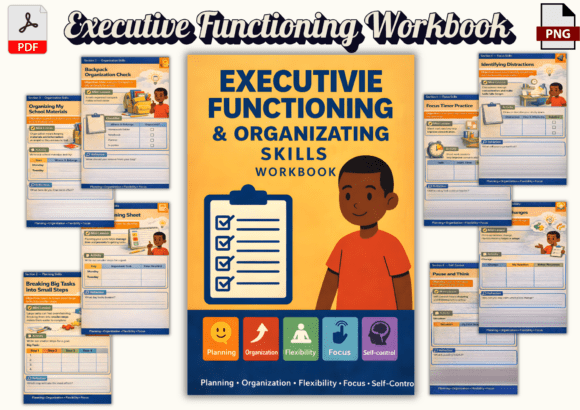
An Executive Functioning Workbook is a collection of worksheets, mini lessons, and reflection exercises that target specific cognitive skills such as planning, organization, focus, flexibility, and self-control. The workbook described here includes 21 pages in a 6x9 inch format, available as PDF and PNG files for either digital use or printing. It combines educational content with hands-on activities that encourage children to practice real-life thinking skills used in school, homework, and everyday decisions.
The workbook covers goal planning, weekly scheduling, organization checklists, study space design, focus timer practice, distraction identification, problem solving, emotion regulation, decision making, and progress tracking. Each worksheet is designed to be visually engaging with colorful layouts while remaining straightforward enough for children in elementary through early middle school grades.
Unlike traditional academic worksheets that focus on math or reading, this workbook addresses the how of learning—the metacognitive strategies that help children manage themselves and their tasks. This distinction makes it relevant across subject areas and settings.
Why Consider an Executive Functioning Workbook
Parents, teachers, and therapists often seek resources for executive functioning because these skills are not typically taught explicitly in standard curricula. Many children develop organization and planning skills incidentally, but others require direct instruction and repeated practice. A workbook offers a structured, repeatable method for introducing and reinforcing these concepts without requiring extensive preparation from the adult facilitator.
Children with attention difficulties, such as ADHD, frequently benefit from explicit executive functioning instruction. However, the skills addressed in these workbooks are valuable for any child learning to manage increasing independence in schoolwork and daily routines. The workbook format allows children to work at their own pace, revisit concepts as needed, and see their progress over time through tracking sheets.
Another reason to consider this type of resource is the growing emphasis on social-emotional learning (SEL) in schools. Executive functioning overlaps significantly with SEL competencies including self-awareness, self-management, and responsible decision making. A workbook that combines SEL principles with practical organization skills can serve multiple purposes in a classroom or homeschool setting.
Skills Addressed and How They Transfer to Real Life
The workbook targets several distinct but interconnected executive functions. Understanding each skill helps clarify what the workbook actually teaches and how it applies beyond the worksheet page.
Planning and goal setting worksheets guide children through breaking larger tasks into smaller steps, estimating time needed, and identifying resources. These skills transfer directly to project planning, homework completion, and long-term assignments.
Organization skills are addressed through checklists and study space design activities. Children learn to arrange their physical environment and materials in ways that reduce clutter and improve efficiency. This translates to managing backpacks, desks, and digital files.
Focus and attention worksheets, including focus timer practice, help children recognize their attention patterns and practice sustained concentration. Distraction identification exercises teach children to notice what pulls their focus away and develop strategies to minimize interruptions.
Cognitive flexibility is built through problem solving challenges and emotion regulation activities. Children practice shifting between different approaches when one strategy does not work, managing frustration, and adapting to changes in routine. These skills are essential for social situations, academic problem solving, and navigating unexpected changes.
Self-control and decision making are reinforced through structured charts that prompt children to consider options, consequences, and their own priorities. This supports impulse management and thoughtful choices in both academic and social contexts.
The progress tracking component allows children and adults to monitor improvement over time, which can build motivation and self-awareness. Seeing documented growth often encourages continued effort and helps children recognize their own capabilities.
Who May Benefit Most From This Type of Resource
An Executive Functioning Workbook is particularly well suited for children who are developmentally ready to engage with metacognitive concepts but struggle with follow-through or organization. Typical candidates include:
- Students in grades two through six who need structured support for homework and classroom routines
- Children with diagnosed attention or executive function disorders who benefit from explicit skill instruction
- Homeschooled children who need practice managing their own learning schedule
- Students receiving special education services focused on organization and self-regulation goals
- Any child who appears disorganized, frequently loses materials, or has difficulty completing multi-step tasks
Teachers and school counselors may find the workbook useful for small group SEL lessons or individual intervention sessions. The ready-made format reduces planning time while providing consistent language and frameworks for discussing executive functioning skills.
Therapists, including occupational therapists and mental health counselors, might incorporate selected worksheets into their sessions as a complement to other interventions. The concrete, visual nature of the worksheets can make abstract concepts more accessible for children who struggle with verbal processing.
Situations Where Alternatives May Be Worth Considering
While a workbook format offers many advantages, it is not the optimal solution in every situation. Understanding the limitations helps determine whether this resource aligns with your goals.
For very young children who are not yet reading or writing independently, the workbook may require significant adult interpretation and scribing. Preschoolers and early kindergarteners often benefit more from hands-on routines, visual schedules, and direct modeling rather than worksheet-based instruction. Alternatives such as picture-based routine cards or play-based executive function games could be more appropriate for this age group.
For teenagers and older adolescents, the 6x9 inch format and colorful illustrations may feel juvenile. Older students often respond better to resources that acknowledge their maturity level, such as digital planning tools, apps, or workbooks designed specifically for secondary students. The skills themselves remain relevant, but the presentation matters for engagement.
For children with significant cognitive or language delays, the written instructions and reflection prompts may present barriers. While some worksheets could be adapted with one-on-one support, a workbook designed for neurotypical development may not align with their current skill level. Specialized resources from occupational therapists or special education curricula might better meet these needs.
For families seeking a comprehensive executive function curriculum, a 21-page workbook should be viewed as an introductory resource rather than a complete program. Children with significant executive functioning challenges may require ongoing support across multiple settings, including environmental modifications, coaching, and technology tools. A workbook is most effective as one component of a broader strategy.
For digital-native children who resist printed materials, the PNG files offer some flexibility, but the workbook is primarily designed for print. Children accustomed to interactive digital experiences may find static worksheets less engaging. If motivation is already a concern, consider whether a printable format will hold their interest before purchasing.
Practical Considerations for Selecting a Workbook
When evaluating whether this Executive Functioning Workbook meets your needs, consider several practical factors that affect usability and effectiveness.
Adult involvement is important for most children working through these exercises. While the worksheets are designed for independent use, many children benefit from an adult explaining the purpose of each activity, helping them reflect on their responses, and celebrating progress. The workbook is a tool for guided practice rather than a self-teaching resource.
Consistency of use significantly impacts outcomes. Sporadic worksheet completion rarely produces lasting skill development. Integrating the workbook into a regular routine—such as a weekly planning session or a daily check-in—increases the likelihood that skills will transfer to real-world situations.
Flexibility of implementation matters for different settings. Teachers may use individual worksheets to supplement existing SEL lessons. Therapists might select specific pages targeting a child’s particular challenges. Parents can work through the entire workbook sequentially or pick and choose based on immediate needs. The modular design supports multiple approaches.
Cost effectiveness relative to alternatives should also be weighed. A single purchase that can be printed multiple times for use with different children or across different school years offers good value for families and educators managing limited budgets. Pre-printed workbooks or curriculum kits from educational publishers can cost significantly more.
Alignment with existing supports matters. If a child already receives occupational therapy, counseling, or special education services, the workbook can reinforce concepts introduced in those settings. Communication with service providers about the workbook’s content ensures consistency in language and expectations.
How to Evaluate Whether This Workbook Aligns With Your Goals
Before purchasing any executive functioning resource, clarify what you hope to achieve. Different goals point toward different tools.
If your primary goal is building awareness of executive functioning concepts—helping a child understand what planning, organization, and self-control look like in practice—this workbook provides a clear, structured introduction. The mini lessons and worksheets explain concepts in child-friendly terms and offer opportunities for discussion.
If your goal is skill practice with real-world applications, the workbook includes activities that translate directly to daily routines. The weekly planning sheet, organization checklists, and focus timer exercises give children concrete tools they can use beyond the worksheet.
If your goal is assessment or progress monitoring, the progress tracking sheet and reflection exercises provide documentation of growth over time. While not a formal diagnostic tool, these records can inform conversations with teachers, therapists, or healthcare providers.
If your goal is independent skill development with minimal adult involvement, consider whether the child in question has sufficient reading comprehension, motivation, and self-awareness to engage with the material alone. Many children benefit from periodic check-ins, and expecting full independence may lead to incomplete or superficial use.
If your goal is addressing a specific executive function deficit—such as severe disorganization or impulse control challenges—targeted interventions from a specialist may be necessary in addition to workbook practice. The workbook offers broad coverage rather than deep treatment of any single skill.
Bringing It All Together
An Executive Functioning Workbook fills a practical niche for parents, educators, and therapists who want a ready-made resource for teaching planning, organization, focus, flexibility, and self-control. Its 21-page structure offers enough variety to address multiple skills without overwhelming children or requiring extensive preparation from adults. The colorful, illustrated format appeals to many elementary-age learners, and the dual PDF and PNG file options provide flexibility for printing or digital use.
The workbook is most effective when used consistently as part of a broader approach to executive function development. It works well for children who are ready to engage with metacognitive concepts but need structured practice to apply them. It is less suitable for very young children, older adolescents who may find the format immature, or children who require specialized interventions beyond what a general workbook can provide.
For those seeking an accessible, affordable entry point into executive functioning instruction, this workbook represents a thoughtful option worth considering alongside other resources and supports. By clarifying your goals and understanding what the workbook does and does not offer, you can make an informed decision about whether it aligns with your child’s or student’s needs. The real test of any educational tool is whether it gets used meaningfully over time and whether the skills practiced on the page begin to show up in everyday life.