Science Magic for Kids: Hands-On Learning at Home
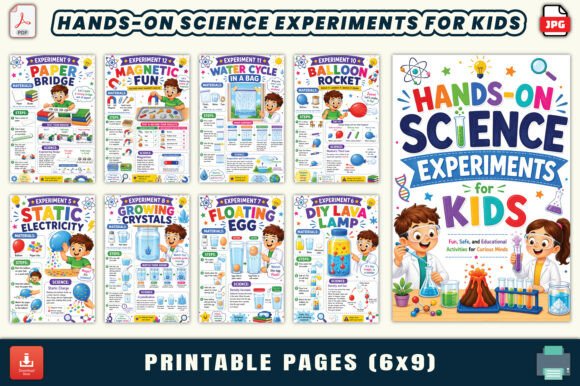
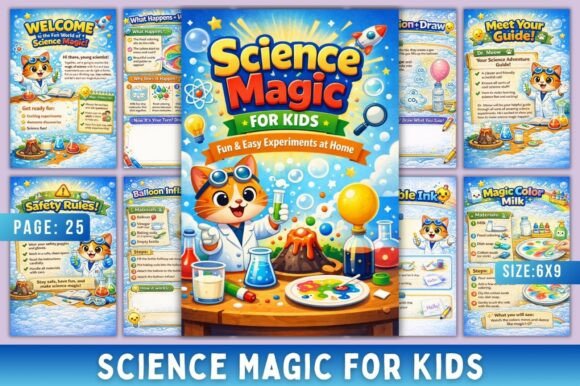
Every parent or educator knows the moment when a child’s eyes light up because something unexpected happens. A baking soda volcano erupts. A paper clip floats on water. A rainbow appears on a blank sheet of paper. That moment of wonder is exactly what Science Magic for Kids captures. This is not just another activity book. It is a carefully designed planner that turns everyday household items into the tools of discovery. For anyone looking to nurture curiosity without overwhelming preparation, this resource offers a clear, practical path.
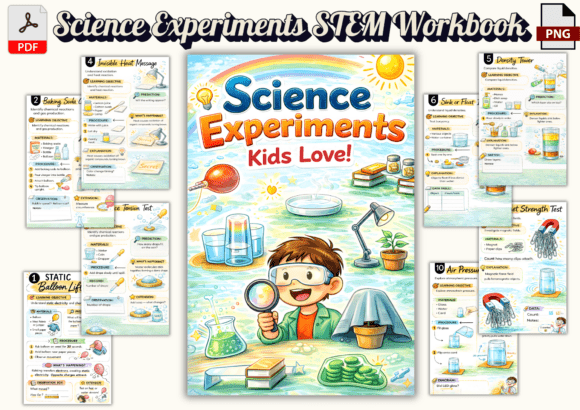
The product stands out because it balances structure with freedom. Each experiment follows a simple format: materials, steps, and an explanation written in language that makes sense to a young mind. But the real magic lies in what comes after the experiment. The drawing sections, the quizzes, the matching games — these elements invite children to revisit what they learned and make it their own. That combination of guidance and open-ended exploration is rare in children’s educational materials.
What Makes This Planner Different
Many science kits and experiment books rely on specialized equipment or hard-to-find ingredients. This planner takes the opposite approach. Every activity uses common materials found around the house: vinegar, baking soda, paper towels, food coloring, dish soap, lemon juice. The barrier to entry is almost zero. A parent can open the planner, check the materials list, and start an experiment in minutes.
The safety-first approach is another layer that makes this practical for real-world use. A dedicated page outlines essential safety rules, and each experiment reinforces those guidelines. For educators working in classroom settings or parents supervising at home, that built-in structure reduces anxiety and increases consistency.
The Draw Reflect sections are perhaps the most inventive feature. After completing an experiment, children are prompted to sketch what they observed. This does more than reinforce memory. It trains attention. A child who draws a volcano after watching it erupt is practicing observation skills that transfer directly to science, art, and writing. The act of drawing forces the brain to notice details that words alone might miss.
For Parents and Homeschoolers
If you are homeschooling or supplementing classroom learning, this planner fits naturally into a weekly rhythm. You do not need to be a science expert. The step-by-step explanations handle the teaching. You simply facilitate the activity and let the child lead the reflection. Over the course of 25 pages, you cover chemistry basics, physics concepts like surface tension, and even optical illusions — all without a textbook in sight.
One practical approach is to assign one experiment per week. Spend the first part of the week gathering materials and reading the instructions together. Midweek, conduct the experiment and let the child work through the activities. Use the end of the week for the quiz or matching game pages, which reinforce vocabulary and concepts. By the end of the month, the child has a portfolio of observations and a sense of accomplishment that a worksheet alone cannot provide.
For Classroom Teachers and After-School Programs
In a classroom setting, this planner works well as a station-based activity. Set up different experiments around the room and let small groups rotate through them. Each group uses their own copy of the planner to record observations. The interactive activities — the quizzes, matching games, and find-the-differences pages — can be used as early finisher tasks or as warm-ups before the main lesson.
The completion certificate at the end is a useful motivational tool. In a classroom, you can pair it with a small celebration or recognition. That simple reward page reinforces the idea that science is not just about getting the right answer but about completing a journey of exploration.
For Content Creators and Bloggers
If you run a parenting blog, a homeschool resource site, or a YouTube channel focused on kids’ activities, this planner provides ready-made content ideas. You can film the experiments, share the printable pages, or create a series around each activity. The invisible ink experiment alone can generate a blog post, a video tutorial, and a downloadable resource page. The rainbow paper activity offers visual appeal that performs well on social media.
Because the planner is designed for 6x9 inch pages with no bleed and 300 DPI, the files are print-ready and look professional on screen. You can offer the PDF as a freebie to build your email list or as a low-cost product in your store. Pair it with a short video demonstration or a blog post about the science behind the experiment, and you have a complete content package.
For Small Business Owners and Product Creators
If you sell educational materials on platforms like Etsy, Teachers Pay Teachers, or Gumroad, the format and production quality of this planner make it easy to bundle or customize. The 25-page length is substantial enough to feel like a complete product but short enough to print at home without high ink costs. The safety rules page, the completion certificate, and the variety of activity types give you multiple angles for marketing: you can emphasize creativity, learning, safety, or ease of use.
You might also consider creating a companion product — a set of printable experiment cards or a material checklist — that buyers can use alongside the planner. The modular nature of the activities makes it easy to expand or remix the content for different age groups or themes.
Practical Guidance for Getting the Best Results
To keep results clear and engaging, start with the experiments that use the fewest materials. The mini volcano, for example, requires only baking soda and vinegar. This builds confidence before moving to activities like rainbow paper, which involve a few more steps. Let the child choose which experiment to try next. That sense of ownership increases engagement.
Use the drawing sections as conversation starters. Ask open-ended questions: “What do you notice in your sketch that you did not see during the experiment?” or “How would you change the experiment next time?” These prompts deepen the learning without adding pressure. The goal is not to produce perfect drawings but to develop the habit of observation.
For older children or advanced learners, encourage them to modify the experiments. What happens if you add more vinegar? What if you use cold water instead of warm? The planner’s structure supports this kind of tinkering because the instructions are clear enough to serve as a baseline, not a script.
Organization matters too. Keep the printed pages in a binder or folder so the child can add extra notes or drawings. The no-bleed format means pages can be printed on standard paper without worrying about margins, which simplifies bulk printing for classrooms or group events.
Why This Approach Works Long-Term
The science planner avoids two common pitfalls: it is not a chaotic collection of random activities, and it is not a rigid workbook that kills curiosity. The balance comes from the structure itself. Each experiment has a clear goal, but the reflection pages and interactive games leave room for interpretation. A child who draws a volcano that looks nothing like the real thing is still practicing scientific thinking — they are translating an event into a representation, and that is a foundational skill.
For the adult facilitating these activities, the planner reduces the cognitive load. You do not have to invent lesson plans or search for materials. You just need to show up, be present, and let the child explore. That shift from “teacher” to “co-explorer” changes the dynamic in a way that benefits both parties.
Ultimately, Science Magic for Kids works because it treats children like real scientists. It gives them a process, a space to record their findings, and a reward for completing their investigations. That combination of respect and structure is what turns a simple experiment into a lasting learning experience.
Whether you are a parent looking for after-school activities, a teacher building a science center, or a creator searching for content that genuinely helps families, this planner offers a practical, ready-to-use solution. The experiments are simple enough to try today but rich enough to revisit many times. And that is the kind of magic that lasts beyond the first eruption.