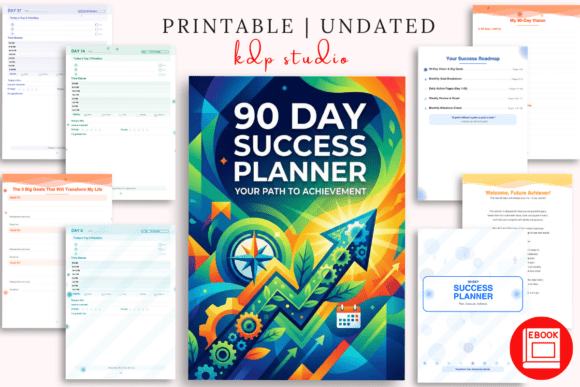
90 Day Success Planner – Focused Goals, Real Results
Turning a big ambition into tangible progress often feels like trying to eat an elephant in one sitting. The 90 Day Success Planner is designed to solve exactly that problem by breaking your largest goals into clear, manageable steps across a single quarter. It’s not just a calendar or a to-do list—it’s a complete system that blends vision work, strategic planning, weekly prioritization, and daily action into one cohesive workflow. Whether you are launching a product, writing a book, overhauling your health habits, or scaling a side hustle, this planner gives you the structure to stay on track without burning out.
Why a 90‑Day Timeframe Works for Real Progress
A quarter is long enough to achieve something meaningful yet short enough to maintain focus and momentum. Unlike a yearly goal that can feel distant and abstract, a 90‑day horizon creates a natural sense of urgency. The planner capitalizes on this by helping you map out a clear end point and then reverse‑engineer the steps needed to get there. This approach also allows for regular reflection—every month, week, and day—so you can adjust your course before small detours turn into major setbacks.
Vision and Goal Clarity: Where Every Project Begins
The first section of the planner pushes you to go beyond surface‑level wishes. Instead of just writing down “grow my business,” you work through 90‑Day Vision Mapping and Big Goal Breakdown Worksheets. These prompts force you to get specific: What does success look like on day 90? Why does this goal matter to you now? What mindset shifts will you need to make progress? This clarity is essential because vague goals produce vague results. By anchoring your plan in both motivation and practical reality, you build a foundation that can withstand distractions.
Strategic Planning: From Priorities to Action Steps
Once your vision is clear, the Strategy Planning section helps you select 3–5 priority goals for the quarter. This forces you to say no to good ideas that don’t align with your main focus. For each priority, you map out milestones—the key checkpoints that mark progress—and break down every milestone into specific action steps. A useful element here is the Obstacle Solution Planning page. Instead of pretending challenges won’t appear, you anticipate them and pre‑write solutions. For example, if you know your mornings are chaotic, you plan to work on your most important task during a protected afternoon block. This proactive troubleshooting is what separates well‑executed plans from abandoned ones.
Monthly, Weekly, and Daily Layers Keep You Honest
The planner is organized into three monthly sections, each with its own monthly goal page, key focus areas, and income or progress targets if applicable. At the end of each month, a reflection reset page invites you to honestly assess what worked and what didn’t. This cadence prevents you from drifting through the quarter without course‑correcting.
Within each month, you get 12 weeks of weekly planning pages. These are built around your top 3 focus tasks for the week, plus habit tracking and a space for weekly wins and lessons. This is where the big‑picture strategy meets the ground level of execution. Each week feels like a sprint, but one that is clearly connected to your quarterly finish line.
Finally, the Daily Productivity pages provide a time blocking layout and a dedicated area for your top 3 daily tasks. The End‑of‑Day Review is a small but powerful ritual: you note what you accomplished, what got in the way, and how you feel about the day’s progress. Over time, these daily notes become a rich source of data for understanding your own rhythms and inefficiencies.
Accountability That Sticks Without Feeling Heavy
The planner’s Accountability Tracking section isn’t about punishment—it’s about visibility. You can track habits, weekly check‑ins, or even share progress with a partner or coach. The simple act of recording your consistency helps you stay motivated, especially during weeks when inspiration runs low. You might set up a reward system for hitting milestones or use the tracking pages to identify patterns, like noticing that you always skip your workout on Thursdays and then adjusting your schedule accordingly.
Adapting the Planner for Different Goals and Audiences
The true power of the 90‑day framework is how easily it adapts to different contexts.
For Creators and Freelancers
If you are a designer, writer, or marketer juggling multiple projects, use the planner to focus on one major deliverable per quarter—say, launching a redesigned portfolio or finishing a client retainer package. Your 3–5 priority goals might include “complete brand guide template” and “publish 12 pieces of sample work.” The weekly action steps become content outlines, draft due dates, and revision blocks. The daily time blocking ensures you protect creative time from meetings and admin tasks.
For Entrepreneurs and Small Business Owners
Business goals like increasing revenue, hiring a team member, or launching a new product line fit perfectly into quarterly cycles. Map your milestones around product development stages, marketing campaigns, or financial targets. The income progress pages help you track monthly revenue against your quarterly goal, while obstacle solution planning helps you prepare for cash flow dips or supply chain issues.
For Personal Growth and Health
A 90‑day health challenge, a mindfulness practice, or a learning goal (like mastering a new language or instrument) can be structured the same way. Vision mapping might include how you want to feel physically or mentally. Your 3–5 priorities could be “exercise 4x per week,” “meditate 10 minutes daily,” and “complete 30 French lessons.” The habit tracker becomes your best friend, and the weekly wins give you positive reinforcement even when progress feels slow.
For Educators and Students
Use the planner to design a semester‑long research project, a creative thesis, or a course development plan. Monthly goal pages can align with syllabus deadlines, and weekly priority pages help break large assignments into research, writing, and revision sprints. The reflection sections are especially useful for improving study habits or teaching methods over the term.
Creative Variations and Extra Ideas
While the planner is already comprehensive, many users adapt it to their personal style. You might pair it with a digital calendar for reminders, or treat the weekly wins page as a mini‑journal. Some people use color‑coding for different life areas (work, health, relationships, learning) to balance their quarterly focus. Others turn the obstacle solution pages into a “risk log” where they rate likely blockers and assign backup plans. For teams, the planner can be used as a group alignment tool—each member fills out their own, then shares top priorities so everyone stays coordinated.
Another idea is to combine the 90‑Day Success Planner with a 30‑day review habit. On day 30 and day 60, do a deeper audit of your progress. Ask: Are my milestones realistic? Do I need to adjust my focus? Have new opportunities or challenges emerged? This keeps your plan alive and responsive, not a rigid document you set and forget.
Keeping Results Clear and Organized
The planner’s structure naturally keeps you organized, but you can enhance clarity by being specific in every field. Instead of writing “work on website,” write “complete homepage wireframe for review by Friday.” Instead of a vague reflection like “good week,” list one concrete win and one specific lesson. This precision turns the planner into a historical record you can review at the end of the year—looking back at four quarters of focused work will show you exactly how far you’ve come.
For accountability, share your weekly wins with a friend, a mentor, or a small online group. Knowing someone else sees your Top 3 Focus Tasks can be remarkably effective. You might even create a simple template from the planner to use as a weekly email update to stakeholders or colleagues.
Practical Inspiration: Two Real‑World Scenarios
Scenario A: Launching an Online Course
A freelancer wants to create and sell a course on design basics. Her 90‑day vision is “10 students enrolled by day 90.” Her priorities are: (1) outline and record core lessons, (2) build a simple sales page, and (3) run a beta launch to a warm audience. Monthly goals include finishing script drafts, recording all videos, and collecting testimonials. Weekly action steps include writing lesson descriptions and emailing potential beta testers. Each day, she time‑blocks 90 minutes for course creation before client work. The obstacle page lists “perfectionism” as a risk, so she commits to releasing rough cuts and improving later.
Scenario B: Building a Consistent Writing Practice
A blogger wants to publish 24 articles over three months. His 90‑day vision is “increase monthly traffic by 20%.” His 3–5 priorities include “write 2 articles per week,” “repurpose 6 old articles into social posts,” and “build an email list of 200 subscribers.” Weekly goals break into research, drafting, editing, and promotion tasks. He uses the habit tracker to mark days he writes for at least 30 minutes. The end‑of‑day review helps him notice that he writes best in the early morning, so he adjusts his time blocks accordingly. By day 90, he not only has 24 articles published but also a clear sense of his productive rhythm.
Final Thoughts on Making the Most of the 90‑Day Success Planner
A planner is only as effective as the intention you bring to it. The 90‑Day Success Planner provides a reliable container for your ambition, but the real magic happens when you show up consistently, reflect honestly, and adjust fearlessly. Whether you are chasing a profession milestone or a personal breakthrough, the combination of vision, structure, and daily action is what turns potential into proof. Start your next quarter with this system and watch how a focused 90 days can change not only what you achieve, but how you approach every goal that follows.