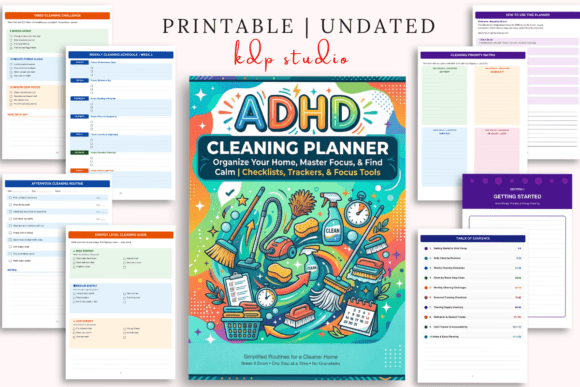
ADHD Cleaning Planner: A Fresh Approach to Home Organization
If you have ever stood in the middle of a messy room feeling paralyzed by where to start, you already understand something important: traditional cleaning systems rarely work for brains wired differently. The ADHD Cleaning Planner was created specifically for people whose executive function struggles make rigid schedules feel like another source of failure rather than a helpful tool. This 120-page guide does not ask you to force yourself into a one-size-fits-all routine. Instead, it meets you where your energy is and helps you work with your brain, not against it.
Why a Standard Cleaning Routine Often Fails
Most home organization advice assumes you can wake up at the same time every day, follow a checklist without distraction, and maintain consistent motivation. For someone with ADHD, that assumption misses the mark entirely. Executive function challenges affect task initiation, working memory, time blindness, and emotional regulation. A planner that ignores these factors might as well be written in another language.
The ADHD Cleaning Planner starts from a different premise: your energy levels fluctuate, and that is okay. Instead of demanding perfection, it offers flexible structures that adapt to your capacity on any given day. This shift in approach makes all the difference between feeling supported and feeling overwhelmed.
What Makes This Planner Different
The first section, Getting Started, includes something called a Brain Dump. Six dedicated pages help you get everything out of your head and onto paper. You separate what must be done from what can wait. This alone can reduce the mental load that often keeps people stuck. When thoughts swirl around without a landing place, progress stalls. Writing them down creates clarity and reduces anxiety.
Energy planning is another standout feature. Instead of forcing yourself to clean at a specific time each day, you learn to match tasks to your natural energy rhythms. High-energy moments can be used for more demanding chores, while low-energy times might be reserved for something small like wiping a counter or folding a few items of clothing. This practical alignment makes consistency more achievable.
Daily and Weekly Routines That Leave Room for Reality
Section two offers Simplified Daily Routines across twelve pages. These checklists focus on high-impact, quick-win tasks like dishes, counters, and visible clutter. You do not need to complete everything to feel successful. Each small action builds momentum and reduces the visual noise that can drain your focus.
The Flexible Weekly Schedules portion includes fifteen pages designed to rotate focus areas throughout the week. There is no pressure to finish every room perfectly. You might tackle the kitchen on Monday and the living room on Wednesday, or follow a completely different order depending on your week. Flexibility is built into the structure so that life interruptions do not derail your entire system.
Room-by-Room Breakdown Without the Overwhelm
The third section focuses on individual spaces. Instead of listing everything that could possibly be done in a room, the planner breaks tasks into tiny, manageable steps. This approach is especially helpful for anyone who has ever looked at a cluttered room and felt the wall of awful rising up. By reducing each job to its smallest components, the planner makes starting possible. You might clean one shelf instead of the whole bookcase. You might sort one drawer instead of the entire desk. Progress happens in increments, and that is real progress.
Practical Applications Across Different Environments
While the planner is designed for home use, its principles translate well to other settings. Professionals managing a home office can use the brain dump pages to clear mental clutter before a work session. Freelancers and entrepreneurs who work from home will find the energy planning tools helpful for maintaining boundaries between living and working spaces. Creative professionals often benefit from the simplified routines because they free up mental bandwidth for more demanding creative work.
Educators and bloggers who juggle multiple responsibilities can use the flexible weekly schedules to keep their environment functional without spending hours cleaning. Small business owners who meet clients at home will appreciate the room-by-room approach for preparing specific areas before appointments. Even digital creators who work primarily online can find value in reducing physical clutter, which often mirrors and reinforces mental clutter.
Real-World Use Cases and Observations
Someone using the planner for the first time might notice that the brain dump pages alone shift their relationship with housework. By externalizing all the tasks swirling in their head, they can prioritize without guilt. Another person might find that energy planning helps them stop forcing cleaning at the wrong times of day, which reduces frustration and increases completion rates.
Parents of young children often report that the flexible schedules work better than rigid systems because children introduce constant unpredictability. When you can adjust your cleaning focus on the fly without feeling like you failed a routine, you are more likely to keep going. The planner validates this reality rather than fighting it.
For anyone who has experienced shame around their living space, the absence of guilt in this planner is worth noting. The language is supportive. The structure is forgiving. The goal is not a magazine-ready home but a functional environment that supports your wellbeing. That distinction matters deeply for people who have internalized negative messages about their cleaning habits.
Practical Considerations When Getting Started
When you begin using the ADHD Cleaning Planner, resist the urge to tackle everything at once. Start with the brain dump pages and spend a few days just writing down what comes to mind. Let yourself notice patterns in your energy without judgment. Then experiment with one daily checklist, perhaps the five-minute version, and see how it feels.
It can help to keep the planner somewhere visible, not hidden in a drawer. Out of sight often means out of mind for ADHD brains. Place it on a counter, desk, or table where you will see it regularly. Consider using a pen you enjoy writing with, as small sensory preferences can increase your willingness to engage with the planner.
Be patient with yourself if you skip days or weeks. The planner is designed to welcome you back without reproach. There is no penalty for inconsistency. Each time you return, you simply pick up where you are. That flexibility is intentional and essential for long-term use.
Who Benefits Most From This Approach
Adults aged twenty to fifty who struggle with executive function will find this planner especially useful. Professionals who need a predictable environment to focus on work, entrepreneurs managing multiple responsibilities, and creatives who thrive in structured yet flexible spaces all stand to gain. Bloggers and content creators who work from home often mention that cleaning feels like a competing demand for attention. This planner helps integrate it into life rather than treating it as a separate burden.
Marketers and educators who recommend tools for productivity and wellbeing may find this planner a valuable resource for their audiences. It aligns with current understanding of neurodiversity and avoids the toxic positivity that often surrounds cleaning advice. The emphasis on energy, permission, and small steps reflects best practices in ADHD management.
Final Observations on a Better Way Forward
The ADHD Cleaning Planner does not promise to transform you into a perfectly tidy person. What it does offer is a realistic, compassionate framework for maintaining a home that works for you. By honoring how your brain naturally operates, it removes the shame that so often accompanies housework and replaces it with practical, repeatable actions. Whether you are fighting the wall of awful or simply need a structured place to dump your thoughts, this guide provides a path forward that feels manageable. The result is not just a cleaner space but a calmer mind.