CBT Thought Processing Planner for Clearer Thinking
Many people go through their days reacting to thoughts without really noticing them. A stressful email sparks anxiety. A minor mistake triggers self-criticism. Before long, the mind is caught in a loop of negative thinking that feels automatic and unshakable. This is where a structured approach like the CBT Thought Processing Planner becomes genuinely useful. It offers a simple, repeatable process for catching those thoughts, examining them, and choosing a more balanced response.
What a CBT Thought Processing Planner Actually Does
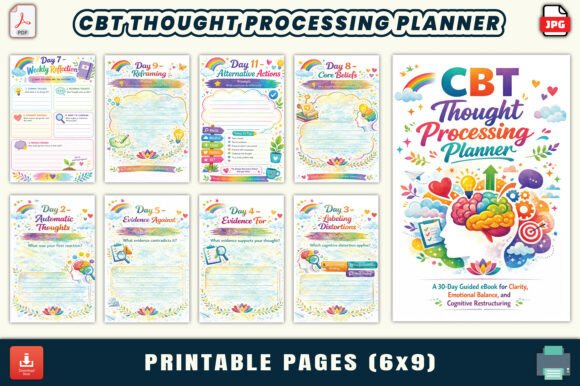
At its core, this planner is a guided workbook based on Cognitive Behavioral Therapy principles. CBT is one of the most researched and effective approaches for managing anxiety, depression, and everyday stress. The planner translates those clinical techniques into a format anyone can use at home. Instead of abstract concepts, you get thirty pages of exercises that walk you through thought awareness, cognitive distortion identification, and reframing.
Think of it as a mental workout routine. Just as you might track physical exercise, the planner helps you log thoughts, notice patterns, and gradually build healthier thinking habits. The exercises are designed to be practical rather than theoretical. You write down a troubling thought, identify which cognitive distortion is at play—like catastrophizing or black-and-white thinking—and then work through steps to see the situation more realistically.
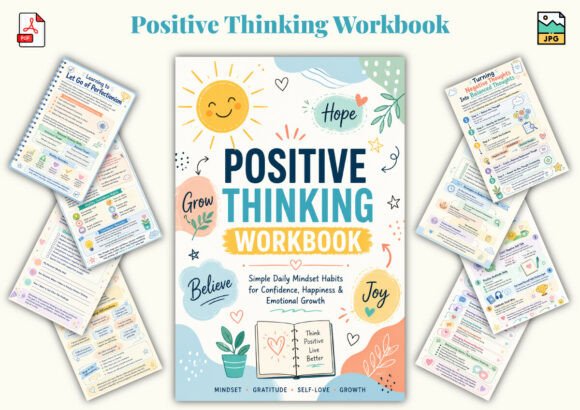
The 6 by 9 inch size makes it comfortable to carry in a bag or keep on a desk. Whether you use the PDF on a tablet or print the JPG pages, the format stays clean and easy to follow. Having thirty unique pages means you are not repeating the same prompts over and over. Each page offers a different angle, which keeps the practice fresh and engaging.
Who Benefits from Thought Processing Work
This planner is not just for people in therapy. It is for anyone who wants to understand their own mind better. Students learning about psychology can use it to apply CBT concepts in real time. Coaches and counselors might give it to clients as homework between sessions. Freelancers and entrepreneurs dealing with the uncertainty of running a business often find the reframing exercises helpful for managing impostor syndrome or fear of failure.
Even if you already journal regularly, adding a CBT framework adds depth. Standard journaling can sometimes reinforce negative patterns if you just vent without reflecting. The planner nudges you to go further by asking specific questions about evidence, alternative explanations, and coping strategies. Over time, this builds metacognition—the ability to think about your own thinking—which is a skill that improves decision-making and emotional regulation.
Everyday Scenarios Where It Fits Naturally
- Morning reflection: Spend five minutes identifying one recurring worry and work through a reframing exercise before starting the day.
- After a difficult conversation: Open the planner to a cognitive distortion breakdown page and see if you misread the situation.
- Weekly review: Use the progress tracking pages to notice patterns. Do certain situations consistently trigger all-or-nothing thinking? Awareness is the first step to change.
- Creative blocks: Artists and writers can use thought records to challenge beliefs like "My work is not good enough" and replace them with more balanced self-assessments.
Why People Are Turning to Structured CBT Tools
Mental health awareness has grown significantly, but access to therapy remains limited by cost, time, and availability. A self-guided planner fills a practical gap. It gives people a way to apply evidence-based techniques without needing a clinical setting. For some, it is a complement to therapy. For others, it is a starting point for building emotional awareness on their own.
The appeal also lies in its simplicity. You do not need to understand psychological jargon to use it. The prompts are written in plain language, and each exercise builds on the previous one. By the time you reach the weekly reflections, you already have a clearer picture of your thought patterns and how they affect your mood.
Another reason for its popularity is flexibility. Some people prefer working digitally, filling in the PDF on a tablet with a stylus. Others enjoy printing the pages and writing by hand, which can feel more grounding. The dual JPG and PDF options accommodate both preferences without forcing a specific workflow.
Practical Considerations Before You Start
While the planner is designed to be beginner-friendly, it helps to approach it with realistic expectations. Changing thought patterns takes repetition. Doing one page and expecting immediate relief is like going to the gym once and expecting visible muscle growth. The real value comes from consistency over weeks and months.
It is also worth noting that CBT works best with honest self-reflection. The exercises invite you to examine uncomfortable thoughts and question beliefs you might hold tightly. This can feel awkward at first. Many people find that writing down a thought like "I always mess up" and then looking for evidence against it feels unnatural. That resistance is normal. The goal is not to force positivity but to find a more accurate middle ground.
If you are currently working with a therapist, you might consider sharing your completed pages with them. Many clinicians appreciate seeing how clients apply CBT concepts between sessions. It can make your therapy time more productive because you arrive with specific observations rather than vague feelings.
What to Look for in a Planner
Not all CBT planners are created equal. A good one covers several core areas: thought identification, cognitive distortion education, reframing techniques, emotional tracking, and periodic reflection. The thirty-page format of this particular planner ensures each area gets enough attention without becoming overwhelming. Single-page designs often skip important steps, leaving users without a complete process. A thorough planner should feel like a complete toolkit, not just a collection of blank journal pages.
Print quality matters too if you plan to use physical copies. The high-resolution JPG files in this set print cleanly on standard paper, and the 6 by 9 inch trim size fits nicely into binders or notebooks. If you prefer digital use, the PDF works well with annotation apps like GoodNotes or Notability.
How Different People Use the Same Planner
An entrepreneur might focus on the cognitive distortion breakdowns to challenge perfectionist thinking that slows down decision-making. A college student could use the daily guided prompts to manage test anxiety. A therapist might assign specific pages to a client working on social anxiety. The structure remains the same, but the content changes based on each person's life circumstances.
That adaptability is one of the strongest features of a thought processing planner. The techniques are universal, but the application is deeply personal. Two people could complete the same exercise and arrive at completely different insights, both valid and helpful.
Building a Sustainable Practice
One mistake people make is trying to fill out every page at once. The planner works better as a rhythm. A realistic approach is to complete one exercise per day or three to four per week, depending on your schedule. Consistency matters more than volume. Even five minutes of structured thought processing each day creates a compound effect over a month.
The weekly reflection pages are especially useful for noticing long-term shifts. Looking back at earlier entries often reveals progress that might otherwise go unnoticed. You might see that a situation which once triggered intense anxiety now feels manageable. That evidence of growth reinforces the practice and motivates continued use.
Moving Beyond the Planner
After working through all thirty pages, many people find that the techniques become internalized. You start noticing cognitive distortions in real time without needing to write them down. That is the ultimate goal. The planner is training wheels for your thinking process. Eventually, the skills become automatic, but the written practice is what builds that fluency.
Some users go through the entire book multiple times, approaching it from different angles each round. Others use specific pages as needed when difficult situations arise. Both approaches are valid. The key is keeping the planner accessible so it can serve as a resource whenever you need it.
If you are curious about improving mental clarity and emotional balance, a structured tool like the CBT Thought Processing Planner offers a practical starting point. It breaks down an evidence-based therapeutic method into manageable steps, supports both digital and print workflows, and adapts to a wide range of personal and professional contexts. The only requirement is a willingness to look honestly at your own thoughts—and that alone is a meaningful step toward change.