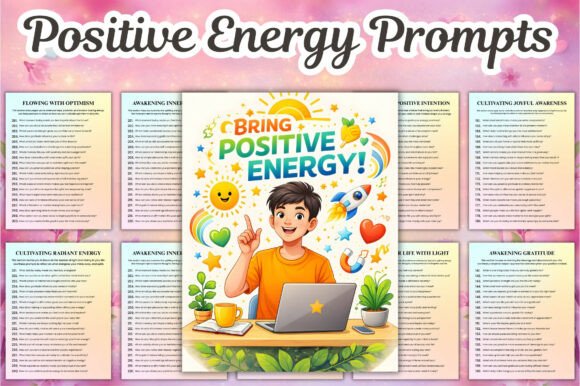
Positive Energy Prompts: A Practical Tool for Daily Reflection and Mindset Shifts
Most of us move through the day on autopilot. We wake up, check notifications, rush through tasks, and rarely pause to notice what’s actually going well. That’s where the Positive Energy Prompts collection enters the picture. It’s not another vague self‑help idea—it’s a set of 300 guided questions designed to help you slow down and pay attention to the moments that already bring you joy, gratitude, and strength. Whether you’re a busy entrepreneur, a freelancer juggling multiple projects, or simply someone who wants to feel more grounded, this printable journal gives you a structured way to shift your focus from what’s missing to what’s present.
The format is straightforward: a PDF, JPG, PNG, or Canva link you can use however you like. You can print the pages and keep a physical journal, or you can type directly into the digital version. The prompts are divided into sections—gratitude, joy, mindfulness, self‑love, optimism, resilience—so you can pick the area you need most on any given day. No pressure to complete a certain number. No right or wrong answers. Just a gentle nudge toward noticing the good.
When Does a Positive Energy Prompts Journal Actually Help?
It’s easy to assume that gratitude journaling is only for people who already have a calm life. In reality, the people who benefit most are the ones who feel overwhelmed, stuck, or drained. Consider a few real‑life scenarios where this tool becomes far more than a nice idea.
Morning Anchor for Entrepreneurs and Creatives
You’re a small business owner. Before you even open your laptop, your mind is already racing through client emails, project deadlines, and that one task you keep postponing. Instead of diving straight into chaos, you pull out a single prompt from the Positive Energy Prompts set. For example: “What is one small win I already had this week that I haven’t acknowledged?” You write it down in two minutes. That brief reflection shifts your brain from I’m behind to I’ve already made progress. That shift changes how you approach the rest of the day—not because the workload changed, but because your perspective did.
Creatives—bloggers, designers, writers—often struggle with self‑doubt before starting a project. The optimism and self‑love prompts help quiet that inner critic. A prompt like “What skill have I improved recently that I used to be afraid of?” reminds you of growth you might otherwise ignore. It’s a quick boost for confidence before you sit down to create.
Mid‑Day Reset in a Busy Professional Setting
Marketers, educators, and corporate employees spend hours in meetings, responding to messages, and solving problems. By two in the afternoon, many feel mentally foggy. Instead of reaching for another coffee, try a mindfulness prompt from the journal. “What does the air around me feel like right now? Cold, warm, still, moving?” That simple sensory question pulls you out of your racing thoughts and into the present moment. It takes thirty seconds but resets your attention.
For freelancers who work alone, the isolation can lead to negativity spirals. A resilience‑focused prompt such as “What challenge from last month taught me something I’m now grateful for?” creates a habit of reframing setbacks. Over time, this builds a mental muscle that makes rejection and difficult feedback easier to handle.
Evening Wind‑Down for Better Sleep
Many adults struggle with nighttime overthinking. The gratitude and joy reflection sections are excellent for this. Pick a prompt like “What moment today made me smile or laugh, even briefly?” and write a few sentences. This trains your brain to scan the day for positive events, which counteracts the natural tendency to focus on what went wrong. Parents, hobbyists, and anyone with an active mind can use this as a calming pre‑sleep ritual—no screens needed if you print the pages.
Personal Growth and Self‑Care Routines
If you’re someone who tracks habits, meditates, or reads personal development books, the Positive Energy Prompts journal fits naturally into that routine. You can pair it with your morning coffee or include it in a weekly “check‑in” session. The emotional awareness prompts help you name feelings you might otherwise suppress. For example, “What emotion am I avoiding right now, and how can I sit with it gently for two minutes?” That kind of question encourages emotional balance without forcing toxic positivity.
Family or Partner Gratitude Practice
A few prompts work well as shared reflection. You and your partner or older children can take turns answering the same question at dinner—no need to write anything down. It sparks conversations about appreciation and strengths that often get buried under daily chores. The journal becomes a tool for connection, not just individual reflection.
Classroom or Workshop Setting
Educators and facilitators can use selected prompts as icebreakers or closing activities. For a group of students or team members, ask everyone to write one response to a prompt and then share it if comfortable. Prompts related to resilience and optimism are especially useful after a tough semester or a challenging project. It normalises discussing growth and effort rather than just outcomes.
Digital Journaling for On‑the‑Go Users
Not everyone wants to print pages. The digital formats (JPG, PNG, Canva Link) let you use the prompts in a note‑taking app, a digital planner, or even as a phone wallpaper you change daily. Bloggers and content creators can repurpose a prompt as a social media caption or a newsletter starter. The flexibility means you’re not tied to a physical notebook—you can engage with the prompts wherever you happen to be.
What to Consider Before You Start Using Positive Energy Prompts
Like any tool, the journal works best when used with intention. Here are a few practical things to think about before you download and begin.
- Consistency over quantity. You don’t need to answer all 300 prompts in a month. Even one prompt per day, three times a week, builds a noticeable shift in mindset. The goal is to create a habit of noticing positive moments, not to finish the whole book.
- Pick a format that fits your life. If you love handwriting, print the PDF on good paper and keep it by your bed. If you’re rarely at a desk, load the Canva link on your tablet or phone and type your answers. The best format is the one you’ll actually use.
- Use the prompts as conversation starters. Some of the most powerful moments come when you share a response with someone close to you. Don’t treat the journal as purely private—let it spill into real life.
- Don’t force positivity. A few prompts may stir up difficult emotions. That’s okay. The journal is about emotional balance, not pretending everything is perfect. If a prompt feels too challenging, skip it and come back later.
- Combine with other practices. You can pair the prompts with a morning walk, a meditation session, or a weekly review. The more you layer it into existing routines, the less it feels like an extra chore.
How the Features Translate to Real Outcomes
Let’s connect a few specifics from the product description to the actual experience.
300 positive energy journal prompts means you never run out of fresh angles. After a few weeks, you might notice you start automatically thinking in prompt‑like questions—your brain begins searching for gratitude and joy without being asked. That’s the shift from forced practice to natural habit.
Gratitude and joy reflection sections help you collect small moments that would otherwise evaporate. That compliment from a colleague, the good taste of your lunch, a few minutes of sunlight on your skin. Writing them down reinforces their importance in your memory.
Mindfulness and emotional awareness prompts give you permission to feel what you’re feeling without judgement. This is especially valuable for entrepreneurs and marketers who often feel pressure to appear constantly positive. Acknowledging frustration or sadness actually helps you move through it faster.
Self‑love and confidence reflections challenge the stories you tell yourself. A prompt like “What did I do this month that my younger self would be proud of?” reconnects you with your own growth. It’s a direct counter to imposter syndrome.
Optimism and resilience themes prepare you for setbacks. When you regularly reflect on how you’ve overcome obstacles in the past, you build a mental archive of evidence that you can handle hard things. That archive becomes a resource when the next challenge appears.
Printable and digital‑friendly format removes the excuse of “I don’t have the right notebook” or “I’m not at home.” You can start right now, on whatever device you have, with a single prompt. The low friction is key to sticking with it.
A Realistic Look at the Results
The Positive Energy Prompts journal won’t solve every problem or erase difficult emotions. What it does is create a small, repeatable practice that trains your attention. Over weeks and months, that practice leads to better emotional regulation, more frequent moments of genuine gratitude, and a stronger sense of personal agency. It’s especially useful for adults who spend most of their day solving problems—the journal reminds you that not everything needs fixing. Some things simply need noticing.
Entrepreneurs find it helps them separate professional stress from personal worth. Freelancers use it to celebrate small project wins that don’t make the portfolio. Educators share it with students as a low‑stakes self‑care tool. Hobbyists and parents use it to reconnect with simple joys that daily schedules tend to crowd out. The specific use case depends on you, but the mechanism is the same: guided attention to the positive, delivered in a format that respects your time.
If you’re looking for a way to bring more positivity and gratitude into your life without adding another overwhelming commitment, this collection of 300 prompts offers a flexible starting point. Print a page, open the file, or pull up the Canva link. Pick one question. Answer it honestly. See how that small act changes the rest of your day.